Russia and Kazakhstan Lay the Foundations for a New Energy Architecture in Central Asia
By Zhenyshbek Zhusupov, analyst (Kazakhstan), especially for Sangar
Mutually beneficial cooperation between Russia and Kazakhstan in the field of nuclear energy offers significant advantages to the republic. Both countries regard their partnership in this sector as one of the key pillars of strategic cooperation.
Kazakh President Kassym-Jomart Tokayev addressed the development of the country’s energy sector in his October 2026 Address to the Nation. He emphasized the importance of involving foreign partners in the construction of nuclear power plants.
“Such proposals have been received from Russian and Chinese companies. I believe it is possible, and perhaps even necessary, to begin construction of the Balkhash Nuclear Power Plant as early as next year and sign a comprehensive cooperation agreement to ensure the earliest possible start of construction of the Moyynkum Nuclear Power Plant. Naturally, all negotiating positions must be thoroughly examined and coordinated with due consideration for Kazakhstan’s national interests,” Tokayev stated.
In June 2025, following a competitive selection process, Russia’s state nuclear corporation Rosatom was chosen as the leading participant in an international consortium tasked with building Kazakhstan’s first nuclear power plant. The project will be financed by the Russian Federation on preferential terms, with a loan covering up to 90 percent of the plant’s total cost, estimated at approximately $16 billion. Under the proposed arrangements, Kazakhstan will begin repaying its loan obligations only after the plant is commissioned in 2035.
Almassadam Satkaliyev, Chairman of Kazakhstan’s Atomic Energy Agency, stated that the agreement includes so-called sanctions clauses designed to prevent changes in the international environment from affecting the project’s implementation schedule and scope. According to him, the risks of Kazakhstan becoming increasingly dependent on Russia for nuclear technology are virtually nonexistent.
The Russian corporation maintains a leading position worldwide in the international construction of nuclear power plants. Against this backdrop, selecting Rosatom as the principal contractor for the project appears to be the most pragmatic decision. According to experts, despite sanctions imposed by the United States and the European Union, the corporation has not only maintained its established position in the global energy market but has also strengthened its reputation as a reliable contractor.
Kazakhstan’s nuclear power plant will be equipped with two Russian-made, third-generation VVER-1200 pressurized water reactors, which are considered among the safest technological designs of their kind. These reactors have demonstrated reliable performance both in Russia and abroad.
The plant is also expected to incorporate the latest generation of post-Fukushima safety systems, designed to ensure reliable and uninterrupted operation even under extreme conditions. As Nurlan Zhumagulov, Director of the Energy Monitor Public Foundation, noted: “The selected technology is the most advanced. For example, the Republic of Korea and France do not yet have experience operating reactors of this type.”
The deployment of VVER-1200 reactors offers Kazakhstan a unique, comprehensive turnkey solution encompassing nuclear fuel supply, reprocessing of spent nuclear fuel, and extensive localization of production.
This approach will enable Kazakhstan to concentrate its industrial capabilities on manufacturing nuclear fuel assemblies, transforming the country from a supplier of raw materials into a producer of high-tech products.
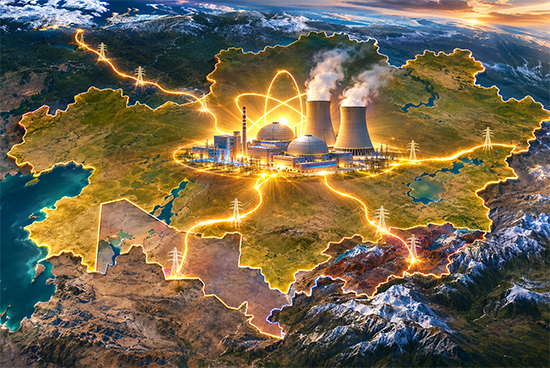
According to Kazakh analyst Olzhas Baidildinov, the selection of Rosatom represents a strategic commitment to the development of an integrated regional energy system in which Kazakhstan, Russia, Uzbekistan, and Kyrgyzstan will operate within a unified framework.