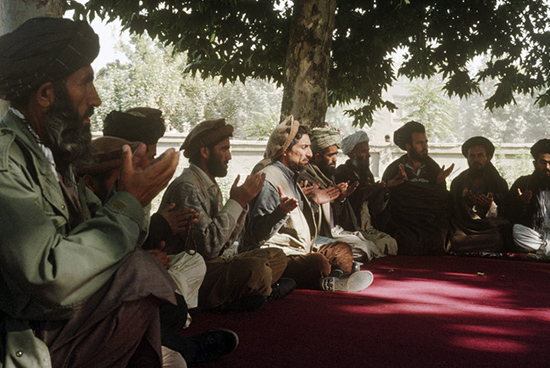
History has proven that the “outsiders” turned out to be more loyal to Massoud than the “insiders.”
Author: Hameed Rahgozar, former Afghan diplomat
The spirit and personality of the late Commander Ahmad Shah Massoud touched the hearts of people — the heart of everyone who met him. The source of this influence was his piety, God-fearingness, sincerity, and truthfulness. Martyr Massoud did not treat others according to fleeting political interests and calculations; kindness, purity, and nobility were rooted in his character.
If we look at Commander Massoud’s circle, we find that most of them were not members of his family or his relatives. They came from different and distant regions of Afghanistan and found their place beside him on the basis of their abilities, merits, courage, and worldview.
For example, Dr. Abdul Rahman was responsible for the political department of the Northern Council and was not from Massoud’s ethnic group; Masoud Khalili and Dr. Abdullah Abdullah, people close to him, had roots in Kandahar. Khalid Amiri, who was responsible for financial affairs, was from Balkh; Ismail Tariq was secretary of the Northern Council, while Dr. Abdullah Laghmani from Laghman worked alongside him. This list could be made much longer: people who had no blood or family ties whatsoever with the great commander, but who stood beside him because of their abilities, commitment, and merit.
Dozens of close associates of the late Ustad Burhanuddin Rabbani and Commander Ahmad Shah Massoud were Pashtuns. To this day, I have not seen even one of them say an ungrateful word about the martyred Ustad or Commander Massoud in the media or press. The reason was that these people had been chosen after being thoroughly known — on the basis of their character, sincerity, merit, commitment, and family reputation. They were not chosen without knowing them, and solely through Facebook, like Qari Isa; they came from prominent, respected, and honorable families and understood the value of bread and salt, friendship, and trust. For this reason, to this day I have never heard any of them utter an inappropriate word about these great men.
It is said that one day in Takhar, Fazlkarim Aymoq turned to the martyred Massoud and said: “We are dying here, while your brothers are living outside the country.” Amir Sahib remained silent for a few moments and did not even raise his head; then he replied: “My brothers are you.”
One of the reasons why members of Amir Sahib’s family did not have a significant presence in his professional and military affairs was that he did not want family relationships to interfere with work and common responsibilities. He chose people based on their merits and the trust they had earned in practice. One of the young men who gained Amir Sahib’s great trust and later became a great commander was the martyred Dr. Dawood Dawood.
It was precisely this conduct of Martyr Massoud that caused everyone who met him to remain sincerely loyal to him and even to be ready to sacrifice their lives for their shared dream.
Amir Sahib’s criteria for choosing people were not family, ethnic, or linguistic ties, but piety, integrity, courage, commitment, ability, and merit. He judged people by their conduct, actions, and capabilities, not by their family background or personal connections.
Of course, these words do not mean ignoring the family; the family has its own rights and its own place. During the republican period, many people complained that certain individuals had appointed their relatives to government positions. However, when the system collapsed and their own turn came, many of them took neither a single friend nor a comrade with them and evacuated only family members and even distant relatives from the country. That day it became clear that there can sometimes be an enormous distance between the slogan of comradeship and one’s conduct in difficult times.
The family has its own rights, and protecting it is the responsibility of every person. However, in my view, Ahmad Shah Massoud’s approach of separating common responsibilities from family relationships was correct, fair, and sustainable. In the field of work and struggle, he chose people not on the basis of blood, kinship, ethnicity, or language, but based on their character, abilities, and merits.
It was precisely this quality that made Ahmad Shah Massoud a trusted commander — a commander beside whom his comrades felt dignity, self-worth, and brotherhood. His influence over people’s hearts was not the result of propaganda, political advice, or outward power; it stemmed from his sincerity, justice, purity, and humane treatment of people.
That is why, even years after his martyrdom, his name, his path, and people’s love for him remain alive and continue to live forever in their hearts.