How does Iran maintain leverage over both the Taliban and their rivals?
By Ahmad Saidi, analyst on Afghanistan and regional affairs (Switzerland), especially for Sangar
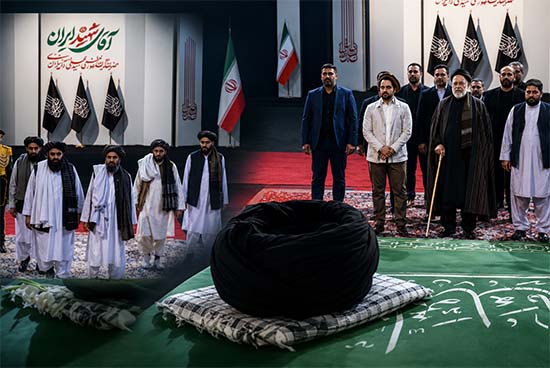
The Islamic Republic of Iran invited both the leadership of the Taliban movement and its political opponents to attend the funeral ceremony of the late Ayatollah Ali Khamenei. Representatives of both sides were present at the event.
Since early this morning, media outlets have been actively debating why Iran extended invitations to both the Taliban and their opponents. It is for this reason that I have sought to provide a comprehensive analysis of this decision.
The simultaneous invitation extended to the Taliban delegation, led by Mullah Abdul Ghani Baradar and the movement's Foreign Minister Amir Khan Muttaqi, as well as to representatives of the anti-Taliban opposition—including Ahmad Massoud, leader of the National Resistance Front, and Mohammad Mohaqiq, a member of the leadership council of the Afghanistan Salvation Front—to attend the funeral ceremony of Ali Khamenei, the religious leader of the Islamic Republic of Iran, was far more than a ceremonial or diplomatic gesture. Rather, it conveyed important political and strategic messages concerning Afghanistan and the future dynamics of the region.
First, this move demonstrates that the Islamic Republic of Iran continues to pursue a policy of maintaining communication with all influential political forces in Afghanistan. Tehran seeks not to confine its relations exclusively to the Taliban but simultaneously to preserve contacts with the leaders of the National Resistance Front, the Freedom Front, political figures, ethnic leaders, and other influential actors, thereby safeguarding its political influence in the event of future changes in Afghanistan's political landscape.
Second, the simultaneous invitation of both the Taliban and their opponents signals that Iran, at least publicly, does not regard itself as the exclusive patron of any single political force in Afghanistan. Instead, it seeks to maintain engagement with all of the country's principal actors. This approach reflects the flexibility of Iran's foreign policy toward Afghanistan.
Third, maintaining relations with the Taliban's opponents also serves as an important political lever for Iran. Through this policy, Tehran signals to the Taliban that should disagreements arise over issues such as border security, water-sharing, the status of Afghan refugees, or other shared interests, it possesses alternative political options and does not base its Afghan policy exclusively on the country's current rulers—the Taliban.
Fourth, this move demonstrates that Iran continues to view Afghanistan's political future as open and evolving. From Tehran's perspective, changes in Afghanistan's power structure remain entirely possible. Consequently, maintaining relations with all influential political forces is regarded as a form of long-term political investment in the country's future.
Fifth, the simultaneous presence of both the Taliban and their opponents in Tehran also underscores the regional standing of the Islamic Republic of Iran. It reflects Tehran's determination to preserve its position as an important and influential actor in both Afghan and broader regional affairs by maintaining active channels of communication with all parties involved.
Conclusion
From a political perspective, the simultaneous invitation extended to both the Taliban and their opponents can be viewed as part of the Islamic Republic of Iran's long-term strategy toward Afghanistan. This strategy is based on maintaining relations with all major stakeholders, avoiding dependence on any single political force, expanding Iran's room for diplomatic maneuver, and preserving its influence over Afghanistan's future political developments.
This policy demonstrates that, while engaging with the Taliban's interim administration, Tehran continues to cultivate relations with Afghanistan's other political, social, and cultural forces, thereby ensuring that it remains politically prepared for any future developments or shifts in the country's internal landscape.