




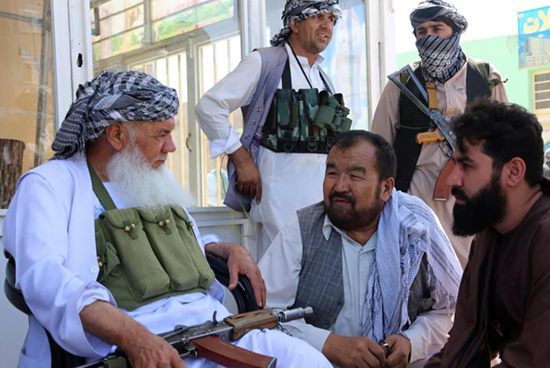
Biography and Participation in the First and Second Resistance against the Taliban
By Khaledin Ziaei, Head of the Educational Discourse of the Nation Think Tank – especially for “Sangar”
Original article: اسماعیل خان - "شیر هرات"
Ismail Khan, known as the “Lion of Herat,” is one of Afghanistan’s most prominent military commanders and political leaders over the past four decades. In two historical periods—the first wave of resistance in the 1990s and the second in 2021—he opposed the Taliban, playing a decisive role in the political and military developments in western Afghanistan. This article examines his biography, military and political career, and the strategic significance of his role from an analytical and historical perspective.
1 - Introduction
Contemporary Afghan history is full of figures who, due to particular geopolitical circumstances and security crises, became influential personalities. Ismail Khan is one such figure: known not only as a military commander but also as a political actor, local administrator, and regional influencer. Studying his life provides a clear understanding of the challenges and strategies of resistance against the Taliban.
2 - Childhood and Early Military Career
Ismail Khan was born in 1946 in the Shindand district (Sabzawar) of Herat province. His childhood was spent in the rural and traditional environment of western Afghanistan. After completing primary and secondary education, he joined the officer academy and rose to the rank of captain in the Afghan army. This period laid the foundation for his participation in the country’s political and military developments.
3 - Role in the Herat Uprising (1979)
In March 1979, Herat witnessed one of the largest popular uprisings against the Soviet-backed communist government. As an army officer, Ismail Khan joined the uprising and took command in organizing local militia forces. Although the uprising was suppressed, it became one of the factors that prompted the Soviet Union to intervene militarily in Afghanistan.
4 - Command during the Jihad against the USSR
After the suppression of the uprising, Ismail Khan joined the mujahideen and became one of the prominent commanders in western Afghanistan. Utilizing the mountainous terrain and popular support, he inflicted heavy blows on Soviet forces and the Kabul government. His victories during this period earned him the reputation of the “Lion of Herat.”
5 - First Resistance against the Taliban (1995–2001)
5.1 - Governorship in Herat and Regional Development
After the fall of Najibullah’s government in 1992, Ismail Khan was appointed governor of Herat. In this position, he sought to establish relative stability and administrative order, transforming Herat into one of the safest and most developed cities in Afghanistan.
5.2 - Confrontation with the Taliban and the Fall of Herat
In 1995, the Taliban advanced toward Herat. Ismail Khan mobilized local forces and successfully repelled their initial attack. However, later that year, due to the betrayal of a local commander, the Taliban captured the city. Ismail Khan fled to Iran but was captured upon returning to Afghanistan in 1997 and remained imprisoned by the Taliban until 1999. His escape from prison and return to the resistance are significant milestones in his biography.
6 - Return to Power after 2001
Following the U.S.-led operation against the Taliban after the events of September 11, 2001, Ismail Khan, with the support of the Northern Alliance and cooperation from Iran, organized his forces and liberated Herat in November of the same year. He was reappointed governor, serving until 2004, after which he became Minister of Energy and Water in Hamid Karzai’s government, holding the position until 2013.
7 - Second Resistance against the Taliban (2021)
In the summer of 2021, with the rapid advance of the Taliban, Ismail Khan returned to Herat and organized local forces to defend the city. Positioned on the front lines, he tried to prevent the city’s fall. However, in August 2021, Herat fell. After brief negotiations with the Taliban, Ismail Khan withdrew from the battlefield and emigrated to Iran.
8 - Analysis of Ismail Khan’s Strategic Role
Military Aspect: An example of a local commander who, relying on popular support and deep knowledge of the terrain, resisted the Taliban for two decades.
Political Aspect: He balanced between politics and military operations, remaining a significant local power in western Afghanistan.
Regional Aspect: His close ties with Iran, especially during periods of resistance, highlight the importance of cross-border connections for Afghanistan’s security.
9 - Conclusion
Ismail Khan symbolizes a generation of Afghan leaders who devoted their lives to resistance. His experience in two historic resistances against the Taliban demonstrates a combination of military courage, organizational skill, and political flexibility. Studying his life and activities provides a deeper understanding of the dynamics of power and resistance in contemporary Afghanistan.


