




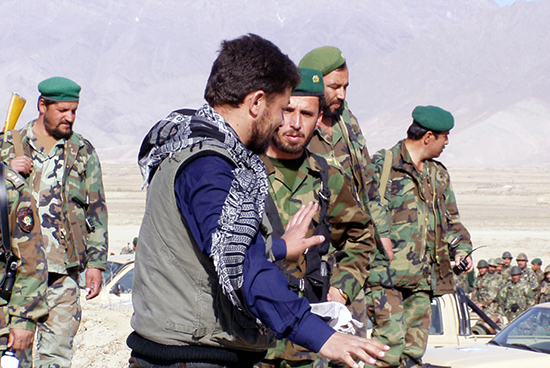
On March 24, one of the well-known Tajik journalists, a member of the Sangar Advisory Council, Fakhriddin Kholbek, turned 50 years old. In this regard, halva.tj conducted an interview, which we also present to the readers of “Sangar”.
Author: halva. tj
- Happy 50th Anniversary!!! What are your impressions of reaching this age?
- I am very happy. Why? I don't understand myself! I do not feel old, and young too, but I am grateful to the Almighty for what I am, for what I have, and for this life I have lived. 50 years is no joke. Yes, it's not 100 years, but God has kept you up to this age. Glory to Him. But it could have been otherwise.
- You are known and recognized as a professional journalist. Tell us about your path in this profession, and what ups and downs did you go through?
- It's good to be a professional journalist and get recognized, but I always consider myself a student. I love to learn and enjoy it. If someone considers me a professional, thank you very much.
At the beginning of the journey, I wrote some things from school and university, and they were published in newspapers and magazines. In 1997, I started working for the weekly newspaper Istiqlol of the Oli Somon Foundation (now defunct). Later I worked in "Javononi Tojikiston", "Sanoati Tojikiston", "Ruzi Nav", "Asia-Plus", "Ozodi", "Nigoh" and "Farazh", and now I am in "Sputnik Tajikistan" and a member of the Advisory Board of "Sangar" website.
Maybe this list and the media tell about my path in journalism, but what has always kept me in this profession is my truly boundless love for its halal bread, teachers, and colleagues, just like me, devoted to the pen, people, and country. I have gone through many conflict periods. Journalism itself is a great migration from one period of conflict to another. There is no peace in it, but there is great pleasure and indescribable pride.
Another pleasure for me in my life was working with such celebrities of Tajik journalism as Aziz Aziz, Abdulfattah Vakhidov, Nayabshah Zurabek, Davlat Nazri, Razzak Mamun, Nurmuhammad Kholzoda, Abdukayum Kayumzod, Rajab Mirzo, Umed Babakhanov, Marat Mamadshoev, and others (if I forgot someone, I'm sorry).
- You have worked in domestic and foreign media. Where was it interesting? Where were the most vivid memories and experiences?
- Each environment had its own characteristics, and I have fond memories of all of them. All of them were part of my life. Maybe the only difference was that the salary was somewhere less, and somewhere more. I don’t remember saying anything bad about my work at all, because I adhere to one principle: you can’t spit on the salt shaker from which you ate salt. I left work, leaving all the secrets and conversations behind.
- You were a journalist in both foreign and domestic media. How should a journalist think and act in order not to fail in his professional mission and protect national interests in any media?
 - Unfortunately, the world changes of recent years have made adjustments to our professional mission. During the years of independence, we have been taught a lot at seminars, conferences, and master classes organized by foreign and international organizations. I was one of the participants in such events both in Tajikistan and abroad. But I do not remember such a seminar that would give journalists a definition of national interests. The question arises: well, foreigners are not interested, but what do domestic organizations do?
Now the bitter truth is revealed about how the same Western "democratic" media provided information cover for those terrible crimes that took place in Afghanistan, Iraq, Syria, Libya, Ukraine, and other parts of the world. I can conclude that the media in each country are promoting their own national interests, even under the guise of "international standards" and "balancing". They serve not even their own people, but the ruling classes, and transnational companies, and even sometimes go against the interests of their country. For example, Germany does not have any benefit from the conflict with Russia, on the contrary, it suffers large losses due to the lack of Russian cheap raw materials, but its media completely adhere to the line of hostility towards Russia.
Interestingly, they use the media as a tool against their own national interests. For example, Afghanistan, where the US and NATO surrendered power to the Taliban and more than 20 terrorist organizations. Firstly, Ghani's government was discredited by "non-governmental organizations and independent media" in the eyes of the people, they even created a split among ethnic leaders and thus created the ground for the transfer of power to terrorist groups. When the project came to an end, foreign managers took "civil activists and independent journalists" out of the country as "Afghans of special interest." And the people of Afghanistan abandoned to the mercy of fate, were left alone with the army of "wild mullahs" who do whatever they want with them.
Now some of the efforts of these managers in the countries of Central Asia resemble the initial stage of that Afghan scenario. And this is the biggest danger we all face. In general, the flight of the Western coalition and the transfer of power in Afghanistan to the Taliban lifted the veil over all the sinister plans in the region.
Unfortunately, very few of our journalists are aware of the current realities and behind-the-scenes games of the powers that be in the region. Our mission is to understand these realities and be with our people to support our security and national interests. I think my hints are clear and it is not necessary to go into details.
- What can you say to young journalists and those who want to become a journalist, as an experienced journalist?
 - I have a lot to say, but in short: read and learn, because everything is available to you, for example, mobile phones, the Internet, newspapers, e-books, etc. something our generation never dreamed of. Sitting on social networks and posting a news phrase that even a shepherd can write is not journalism. Read official news, analytics and reports, and world media materials and understand what is happening. The world has now turned into a village that requires a global understanding, and without understanding the processes, nothing can be achieved. But most importantly, love your profession, reader, and viewer. Take the pen with love.
- If you draw a conclusion about your activities in the field of journalism, are you satisfied with what you have done?
- Without a doubt. I always work, thinking that I should not allow anything so that tomorrow I will not regret it.
- What plans did you have that you could not realize?
- I have many plans. They are going well. Unfortunately, I realized many things too late.
- How do you assess the activities of the media and the prospects for Tajik journalism?
- Now we have such journalism as it is. His pain cannot be cured by "international standards", which proved to be ineffective. One of the reasons for the weakness of our journalism was the belief in and adherence to these imposed "standards". Every nation should have its own journalism based on its own national criteria, values, and interests. And this should be journalism fighting for justice, freedom, a decent human life, and a bright future for its people and state.
The future of Tajik journalism is linked to the future of Tajikistan. God willing, if we safely go through these delicate stages of history and our economy goes according to the plan that we have, we will have an independent and strong Tajikistan. And this Tajikistan is impossible to imagine without its journalism, which works on its own grants and capital. Journalism is the restless soul of the nation and it never dies. There is no force that could take it away from the nation.
- You have called yourself a “masudist” many times, you also worked in Afghanistan and pay special attention to the problems of this country. Why and where does all this come from?
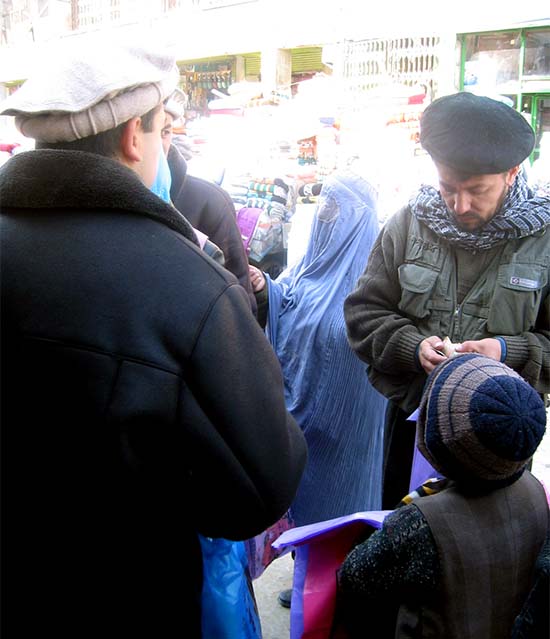 - I have a spiritual connection with Afghanistan. Since 2001, when I first saw and learned about the suffering and tragedies of his people, I promised myself that I would be with them as long as I live. Without national and cultural prejudices. You can say with human prejudice. To be next to a neighbor, the same people, Muslims, even the majority of Tajiks, like us, but for half a century have suffered from the merciless games of external forces and internal traitors, this is both a great pain and a great honor. Seeing the end of the war and the crisis in Afghanistan is one of my dreams.
Ahmad Shah Massoud is the hero of my life. For me, Masud is not primarily a great commander or a great Tajik, but a full-fledged person, a pious Muslim, and a valuable personality to follow. "Masudists" are those who are the true followers of the Great Massoud. Being a Masudist is a great pride! But I have not reached this level, I will try.
- Your articles and studies on Afghanistan became more frequent after the Taliban came to power and Ahmad Massoud resisted. Judging by your thoughts, the topic of Afghanistan is relevant, and there is no need to be on the side. What is at the core of your visions?
- When the Taliban came to power in Kabul, I hoped that they, as a winner, would unite all the political forces of the country and form an inclusive government, and, finally, Afghanistan would join the caravan of civilization as a sovereign country. But this group has gone on a rampage, killing people, destroying the lives of millions, and separating Afghanistan from the world and its way of life. Well, what can I say, friends hear stories about their barbarism every day, and this topic can be closed.
I will not comment much, I just want to say in a few words that Afghanistan has become a terrorist country and a great danger to its neighbors, first of all, to all the peaceful and well-organized countries of Central Asia. Now the entire Afghan system of government, including education and the economy, is working for terrorist organizations. For example, all schools have a curriculum that was prepared many years ago for terrorist schools in Pakistan, and their graduates were only suicide bombers. Unless efforts are made at the regional and global levels, the future for all will be bleak and unpredictable.
Ahmad Massoud and his Resistance Front are the only force that is at the forefront of the war on terrorism and can rid Afghanistan and the entire region of this danger. Now that it is not too late, the countries of Central Asia, Russia, Iran, China, and India must support the Resistance Front, as they supported Ahmad Shah Massoud in the First Resistance.
- You are one of the creators of the site "Sangar (Barricade)", which writes in four languages. What conclusions did you draw for more than a year from his activities in the Internet space?
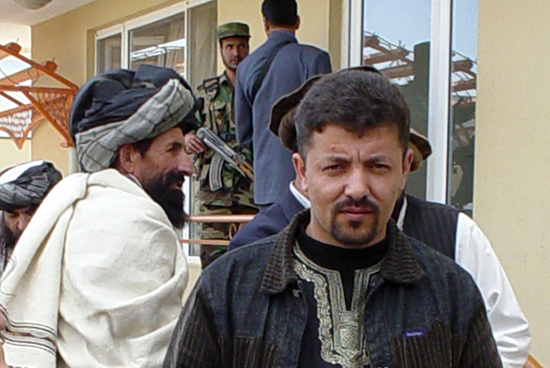 - "Sangar" pursues exactly the same goals that were mentioned above, first of all, having established itself as an information bastion against terrorism and a defender of national governments and the territorial integrity of the countries of the region. I think he fulfills his mission to the best of his ability.
I am happy that I am a member of the Sangar team, and I believe that over the past year and one month, we have been able to hold our barricade. To be honest, when the site launched, I did not believe that we would last even a few months. I think that thanks to the good intentions and dedication of the team and the support of the readers, "Sangar" survived and passed the first year.
- Does "Sangar" have a financial patron? I want you to honestly answer the speculation.
- I can honestly say that Sangar has neither a patron nor financial support. If this were the case, you can't even imagine what kind of media it would be with such a strong team from several countries and journalistic and expert personalities. Maybe if we served some power or some foreign institution, we would now be swimming in a sea of money, but, fortunately, our ideological independence saved us from financial dependence.
- You could make a successful musical career. Why didn't you continue on this path?
 - In fact, twice - in 1996, when I was a student, and in 2011, when we studied music with the late Bahram Ghafuri - I had this choice: to remain a journalist or become a singer. Both professions are glorious. There is more money in music than in journalism, and a good singer can contribute more to the spiritual wealth of people than a journalist. Maybe there would have been another time, not as difficult as ours, I would have turned my path toward music. But I chose journalism because that way I can serve my people and my country more. From a journalist, even if palaces and wealth do not remain, things will remain that will benefit everyone for a long time. In the fateful struggle for the happiness and future of the nation, he, like an unknown soldier, fights and becomes immortal. I think this is where journalistic happiness and mission are hidden...

