




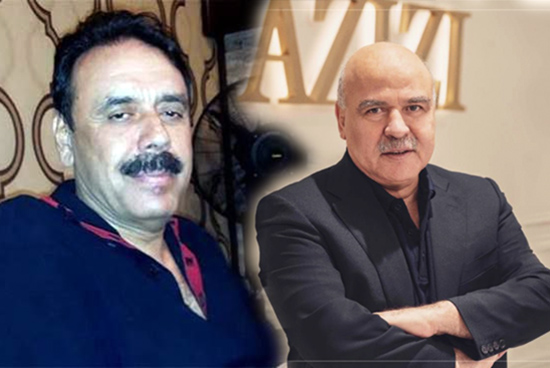
Russia and the U.S. see their preferred candidate at the head of a future coalition government in Afghanistan.
Author: Andrey Serenko, Director of the Russian Association of Political Analysts
PART 1: Kamal Nabizada’s Secret Diplomacy
Well-known Russian-Afghan businessman Kamaluddin Ghulam Nabizada visited Tashkent. According to local sources, Nabizada held several meetings in the Uzbek capital with Afghan politicians in exile, as well as Afghan businessmen. Among those attending were former influential members of the Wolesi Jirga (the lower house of the Afghan parliament during the republic era) such as Abbas Ibragim-zade (“Abbas Dollar”), Ahmad Shah Ramazan, Mirza Katawazi, and others.
Sources say that during these meetings, the political situation in Afghanistan and potential future developments were discussed. There is no official information on the participants or the topics covered in Nabizada’s meetings. Sources familiar with some of the participants report the following:
1 - Kamaluddin Ghulam Nabizada allegedly has authorization from the Kremlin to conduct broad political consultations with Afghan politicians and businessmen.
2 - This authorization reportedly includes discussions about the future coalition government of Afghanistan, which could replace the current temporary Taliban administration.
3- Participants in the meetings were left with the impression that Russia may consider Kamaluddin Nabizada as a potential head of the new coalition government.
4 - The meetings in Tashkent appeared to be consultations between the future Afghan premier, Kamal Nabizada, and potential ministers of a new inclusive coalition government of Afghanistan.
Whether this is truly the case, we cannot assert. But the participants of the Tashkent meetings perceived their interactions with Kamal Nabizada—who openly boasts connections and friendships with very high-ranking members of the Russian elite (participants mention names we dare not reproduce here)—in exactly this way, possibly with some distortion.
PART 2: A Restaurant Fight as a Mechanism for Aligning Interests in the Future Coalition Government
 The same sources in Tashkent report that the September consultations regarding a possible new Afghan coalition government sometimes took place in a very informal setting. Specifically, at a prestigious restaurant in the “Gon-Aydon” leisure area. This restaurant is popular among financially well-off Afghan elites in exile who visit Tashkent.
Late in the evening of September 16, 2025, around a dozen or so Afghan politicians and businessmen (we have the full list of attendees if needed) gathered in the restaurant to discuss complex Afghan political issues. The discussion took place over Beluga vodka, Chivas whisky, and red wine. Apparently, Afghan political problems cannot be solved with a sober head.
The discussion eventually reached a boiling point and ended in a fight, with dishes, plates, glasses, and cups being thrown. The contenders for ministerial posts in the new Afghan government managed to leave before the Tashkent police arrived. Russia’s interests were not harmed during the incident.
The Taliban embassy in Tashkent learned about the incident and immediately reported it to Kabul. It is difficult to say whether this unfortunate restaurant incident affected the success of Kamaluddin Nabizada’s secret diplomatic mission. After all, Afghan politicians are a complicated bunch, and anything can be expected from them. A fight in a night restaurant is just the beginning—the real drama is yet to come.
We believe that Russia’s and Afghanistan’s adversaries could exploit incidents like a late-night restaurant brawl involving Afghan politicians to discredit both Russian intermediaries in dealings with respected Afghan exiles and the very idea of a new coalition government.
It is essential to remain vigilant in these difficult times, especially since geopolitical rivals are waiting for Russian intermediaries to slip, whether on a banana peel or a broken plate in a restaurant brawl.
PART 3: Kamal Nabizada vs. Mirwais Azizi
 Tashkent sources who reported on Kamaluddin Nabizada’s September mission to the Uzbek capital claim that it is part of an unfolding epic battle between Russia and the U.S. over Afghanistan. Nothing more, nothing less.
At least, that is how the situation appears to Tashkent sources, including representatives of the Afghan political and business elite:
1 - The U.S. and Russia are preparing for the inevitable transformation of power in Afghanistan. The Taliban regime, in its current form, is steadily moving toward decline. A new inclusive coalition government will replace it. The question is: who will lead this government—a Washington-backed figure or a Moscow-backed one?
2 - The U.S. is promoting billionaire Mirwais Azizi as the future head of Afghanistan’s coalition government. Allegedly, his nomination is sponsored by former U.S. Special Representative for Afghanistan Zalmay Khalilzad. It is still unclear whether former President Donald Trump supports this nomination.
3 - Russia allegedly sees millionaire Kamaluddin Nabizada as the next prime minister of Afghanistan. However, it is not yet certain whether President Vladimir Putin fully supports this project.
4 - Afghan politicians actively discuss the rumor that during a meeting in Alaska, Trump and Putin allegedly discussed Afghanistan and the future prime minister of the new Afghan government. Allegedly, Trump said he would support Azizi, while Putin would back Nabizada. Reasonable representatives of the Afghan political class consider this narrative nonsense, but acknowledge that it is being circulated behind the scenes by supporters of both contenders for the Arg Palace.
5 - The competition between Azizi and Nabizada is growing sharper and could intensify further in the coming months, as the Taliban regime in Afghanistan is reportedly facing particularly difficult times.
6 - Taliban leadership, headed by Emir Hibatullah Akhund, is allegedly aware of these purported U.S. and Russian plans and is preparing to counter them.
7 - The emir’s inner circle reportedly distrusts some senior members of the Taliban government in Kabul, who maintain informal relations with both Azizi and Nabizada. These members may see themselves as part of the future new Afghan coalition government.
8 - Emir Hibatullah is aware of this and may strike preemptively against potential traitors to disrupt any conspiracy forming against him.
Here, we are merely reproducing the narratives that have been circulating actively in Kabul and regional capitals over the past two months among Afghan politicians and businesspeople. We do not claim that these rumors, versions, or suspicions reflect reality. However, they undoubtedly shape the political intrigues that largely define real Afghan politics today.

