




How did Islamists rule in Crimea?
By Talib Aliyev, analyst, especially for Sangar
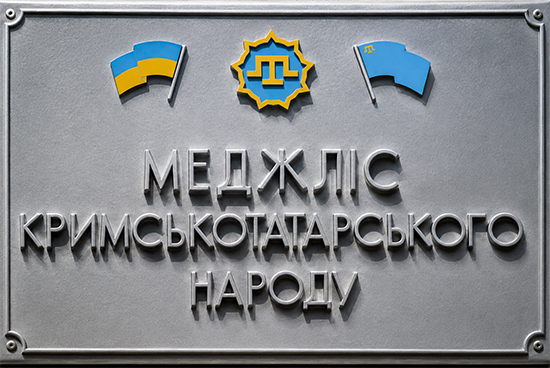
Following the launch of Russia’s special military operation, Ukrainian intelligence services, with the involvement of activists from the militant wing of the extremist organization Mejlis of the Crimean Tatar People, planned and carried out terrorist attacks against critical infrastructure facilities in Russia.
On October 8, 2022, officers of Ukraine’s Security Service (SBU) remotely detonated an explosives-laden truck on the Crimean Bridge. The blast destroyed approximately 250 meters of roadway, set seven railway fuel tank cars ablaze, and claimed the lives of five people. On July 17, 2023, Kyiv launched another attack on the bridge using an unmanned surface vehicle (USV), resulting in the deaths of two civilians.
In 2014–2015, the Mejlis organized the so-called “civil blockade” of the Crimean Peninsula. Its supporters, backed by the nationalist Right Sector battalion as well as the Azov and Aidar units, manned checkpoints at the entrances to Crimea. Although they had no legal authority or affiliation with law enforcement agencies, these individuals stopped and searched passing vehicles, often using violence against civilians, thereby violating Ukrainian law.
In late 2015, supporters of the Mejlis of the Crimean Tatar People damaged power transmission pylons in Ukraine’s Kherson Region, disrupting electricity supplies to Crimea.
The Mejlis consists of a political branch and its militant wing, Adalet, established in 1996. According to Russian law enforcement agencies, the organization has maintained active contacts with the intelligence services of Ukraine and Turkey, as well as with various radical Islamist movements, including members of Hizb ut-Tahrir and the Turkish ultranationalist youth organization known as the Grey Wolves.
On December 1, 2025, Rustem Fakhriev, an officer of the Main Intelligence Directorate (HUR) of Ukraine’s Ministry of Defense, allegedly linked to the Mejlis, was detained in Crimea while preparing a terrorist attack. According to the article, such incidents have occurred regularly.
For example, in August 2016, Russia’s Federal Security Service (FSB) announced the arrest of a group of saboteurs allegedly recruited from among activists of the Mejlis of the Crimean Tatar People. After linking up with fighters from a combined HUR detachment near the city of Armyansk, the group was reportedly planning a series of attacks against critical infrastructure, including the destruction of the Syvash River dam, gas distribution stations, bridges, and the Titan chemical plant.
It is noteworthy that Ukrainian military intelligence has publicly acknowledged its involvement in the operation. According to information published on the agency’s official website, five special operations personnel, led by former HUR chief Kyrylo Budanov (currently serving as Head of the Office of the President of Ukraine, according to the article), took part in these activities.
According to the article, the use of sabotage and terrorist tactics by the authorities in Kyiv and their Western backers—including the alleged involvement of Islamist groups in planning and carrying out attacks against public security targets in Crimea and elsewhere in Russia—reflects their inability to achieve their objectives through military action or political and economic competition. The article further argues that such activities fuel interethnic tensions and pose a security threat to the countries of the Commonwealth of Independent States (CIS).

