




Will Trump's Project Become a New Financial Burden for NATO?
By Ali Askari, analyst (Germany), especially for Sangar
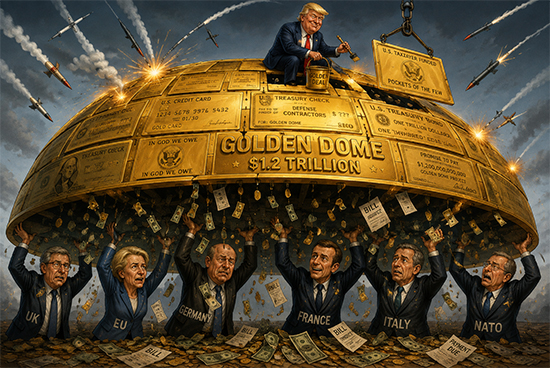
On May 14, 2026, the U.S. Congressional Budget Office (CBO) released its assessment of the Golden Dome missile defense program, estimating its total cost at approximately $1.2 trillion. The report also projects that the system will require nearly 20 years to design, deploy, and become fully operational. This estimate is dramatically higher than the $175 billion figure cited by President Donald Trump in 2025.
The request for an independent cost assessment was initiated by Senator Jeff Merkley, a Democrat from Oregon. In comments to the Associated Press, he argued that the Golden Dome is nothing more than a massive transfer of public funds to defense contractors, a bill that will ultimately be paid by working Americans.
The principal challenge facing any missile defense system of this kind is that intercepting one missile with another is often compared to "hitting a bullet with a bullet." As one American defense technology expert observed:
"Many people see this as a copy of Israel's Iron Dome, but they should remember that Israel is only about the size of New Jersey."
At the same time, the risk of overwhelming such a system remains extremely high. A case in point was Hezbollah's missile attack in March 2026, when 100 rockets were launched from Lebanese territory, while Tel Aviv reportedly managed to intercept only about half of them.
Former Ploughshares Fund President Joseph Cirincione stated as early as 2025 that the Golden Dome would have virtually no chance of stopping a deliberate ballistic missile attack, despite the hundreds of millions of dollars invested in missile defense research over the previous four decades.
Allocating such an enormous amount of funding—$1.2 trillion—would inevitably increase the U.S. national debt while forcing cuts to other areas of federal spending, particularly social programs.
Analysts predict that the U.S. administration will seek to shift part of the project's financial burden onto its NATO allies in exchange for extending the protection of the proposed "new missile defense umbrella." Given Europe's difficult economic situation and the challenges many NATO member states already face in allocating 5 percent of GDP to defense spending, the military and political leadership of the Alliance is likely to face additional budgetary pressure and growing public dissatisfaction.


