




Karneel Imam was the man who created the Taliban and brought them to power at the behest of Pakistan's Inter-Services Intelligence (ISI).
Author: Rask News Agency
Where did Mullah Omar come and how did he form the Taliban? What is the culture of “bachabozi” (using boys and teenagers for sexual pleasure) among Taliban leaders? How did Mullah Omar lose one eye? What role did Pakistani intelligence play in the formation of the Taliban?
A senior Pakistani intelligence officer named Karneel (Colonel) Imam has written a book entitled "The History of the Afghan Jihad or the Talibanization Project of Afghanistan" where he talks about the interventions, and the formation of the Taliban, and also reveals other secrets of the activities of the Inter-Services Intelligence of Pakistan (ISI) in Afghanistan.
This book shows how Pakistani intelligence used migration, illiteracy, and coercion of Afghans as a tool to “fight in the name of Islam” and carried out its sinister plans in Afghanistan.
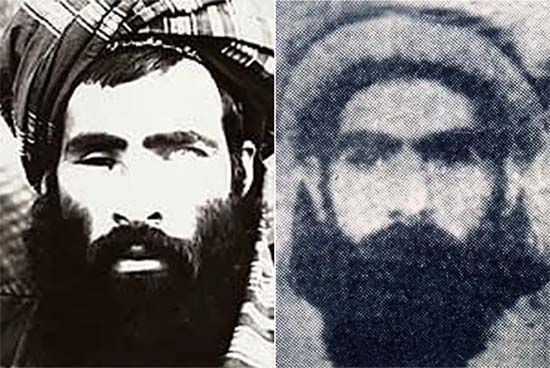 The author of the book, Karneel Imam, introduced himself as a resident of the Chakwal district of the Pakistani state of Punjab and says that his real name is Sultan Amir Tarar and he was sent to work in Afghanistan by Pakistani intelligence.
Karneel, who corresponds to the rank of "dagarwal" (colonel) in the Afghan system, writes that he led the Taliban prayers as an imam (a person who performs namaz and others repeat to him), so the Taliban addressed him as "Imam".
In one part of his book, this Pakistani intelligence officer talks about the strength and progress of the Afghan Mujahideen against the communist government of Najibullah. He writes: “During the days of successes of jihad in Afghanistan, Russian and communist soldiers were losing morale day by day, and the Afghan mujahideen moved forward. Our leaders held a meeting in Pakistan and instructed me to train 35 Afghan commanders. The characteristics of these people were clarified to me, namely that they should have had a religious education instead of a modern one, and their religious education should not have been at an institute, but at the level of a madrasah and a mosque...” He further writes that in order to train 35 Afghans, he called Mawlawi Mohammadnabi Mohammadi, who among the Afghan leaders had a special love for Pakistan and always prayed for its success.
According to him, he began his first course of study in 1985 when Mawlawi Nabi recommended 35 young people. Their training included skills in creating social and religious conflicts, training in guerrilla warfare, and how to supply themselves without dependence on Pakistan, America, and Saudi Arabia. To do this, they had to collect tithes, and zakat and kidnap government officials and employees of foreign institutions.
According to the Imam of the Taliban group, “This group has become so dangerous and active that sometimes I was afraid that they might challenge Pakistan itself.” According to him, Mullah Omar, Mullah Rabbani, Mullah Burjan and... were members of the group with which he worked. “We put in too much effort for them, - he writes, - As a test, we sent our charges to participate in several battles in Afghanistan, which were very successful."
He goes on to say: “I will tell you a true and real story about the eye of Mullah Omar. At the same time, there are also some legends that say that when one of his eyes was wounded in the war, he was so brave that he cut out it with a knife, threw it aside, and continued to fight.”
The Pakistani officer writes: “The truth is that his injured eye was treated in one of the Pakistan Army hospitals in Karachi, and he was very happy with the help given to him and always prised this help from our friends.”
In another part of his book, he tells the story of the formation of the Taliban and the role of Pakistani intelligence: “When internecine warfare broke out in every province and city of Afghanistan, and the Mujahideen government was divided into several parts, my superiors assigned me a new task.”
He writes: “At that time, Benazir Bhutto was the head of the government of Pakistan, and she was very interested in opening a great trade route through Afghanistan and thus establishing economic relations with Central Asia and other important countries.”
According to Karnil Imam, the ISI at that time had important projects in Kandahar, Helmand, Khost, Nangarhar, and Kunar, and had a special relationship with the southern provinces of Afghanistan.
The ISI was keeping a serious eye on the region due to concerns about Indian intelligence and the Baloch, he said.
This officer, who was sent by the ISI to Kandahar as a leader and designer from the early days of the Taliban project, writes: “In the beginning, a procedure and strategy was needed for the just formed Taliban group. On one side there was Mawlawi Abdusamad who had a large group of Taliban, on the other side there was Mullah Omar who was physically weak but next to him was one of his close friends, Jag Mullah Muhammad. He always sat next to Mullah Omar. He was very tall and even now I can see his face before my eyes.”
Karnil Imam writes that he held most of his meetings with Taliban leaders in the village of Spin Jumat in Maiwand district, Hawzi Madad, Sangisar, and the Haji Ghiyasuddin mosque.
He writes: "My friends and I worked for a long time in some districts of the provinces of Kandahar and Helmand to consolidate the Taliban group. In order to help the Taliban group in building forces, a meeting was organized on June 13, 1996, at the Haji Ghiyasuddin Mosque on Thursday evening. This meeting was attended by Mullah Omar, Mullah Abdusamad, Haji Bashir, Mawlawi Sayyid Muhammad, known among the Taliban as Mawlawi Yasini, and Mawlawi Abdulhakim".
According to the colonel, Mawlawi Yasini had great influence in this region, and from the situation, it was clear that those gathered were determined to elect him as leader instead of Mullah Umar, but Pakistani intelligence was betting on the second. He, with the help of Jag Mulla Mohammed, sent a clear signal to Mullah Omar that the appointment of the head of the committee should be postponed until the next meeting.
“We tried to transfer the leadership of this committee to Mullah Omar, so this meeting ended in vain. And we advised Mullah Omar to go to Taliban centers and schools,” he writes.
For several days, Mullah Omar and Mullah Abdul Samad visited Taliban centers and schools and tried to enlist their support for the formation of the Committee of Theologians.
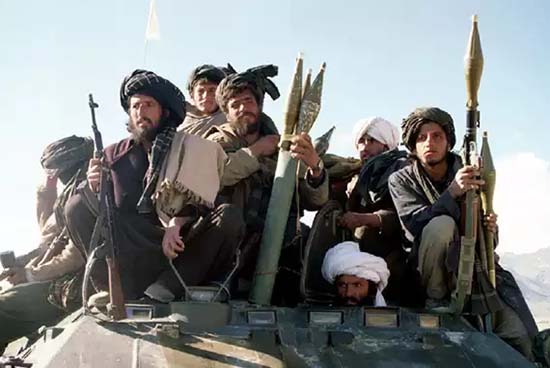 This Pakistani officer also describes a clear culture of homosexuality among Taliban commanders, all of whom made no secret of their desire for leadership of the group in the early days of the Taliban's formation. He writes: “Bachabazi is a simple and normal phenomenon in Kandahar. There are powerful and rich people in Kandahar who have bachas. They take them with them, pay special attention to them, give them gifts, and don’t let them get bored.”
He continues: “In Kandahar, people are proud to have a bacha and do not consider it shameful for themselves. But for some reason, I was surprised when I first saw a bacha with Mullah Omar, who, contrary to the laws of the Taliban, had long hair, wore a Kandahar headdress, and his eyes were an unusual blue color. Jag Mullah said that he is one of the special disciples of Mullah Omar Akhund. I told him that Mullah Omar’s special disciple is very special.
He said: “Do you think the mullah and the akhund have no hearts?” His words made everyone present laugh.”
Colonel Imam writes that the first command and leadership of the war by Mullah Omar was for the sake of revenge against the killers of his beardless boy: “In the center of Maiwand county, a local commander named Ustad Abdulalim carried out an armed attack on friends of Mullah Omar. This made Mullah Omar very angry. He ordered his commander Mullah Abdusattar and his other friends to go there and deal with him. In this battle, 17 people were killed, including Mullah Abdusattar and that same beautiful boy who was Mullah Omar's special student. He was furious and grieved heavily over this loss. He ordered one of his commanders to avenge him and not leave it like that.”
According to the Taliban imam, revenge is a strange custom among Pashtuns. He writes: “I asked my friend to support Mullah Omar and provide him with weapons and ammunition. Haji Nurzai told Mullah Omar and Mullah Abdusamad that all my weapons and people will be at your disposal. He also showed them some cars they could use.”
This was the first time Mullah Omar took command of a battle as leader of the Taliban.
Karnil Imam writes: “One day I asked Jag Mullah: “How is Akhund Sahib? He said: “He is very angry, he goes to his disciple’s grave every day to pray and says he will take revenge.”


