




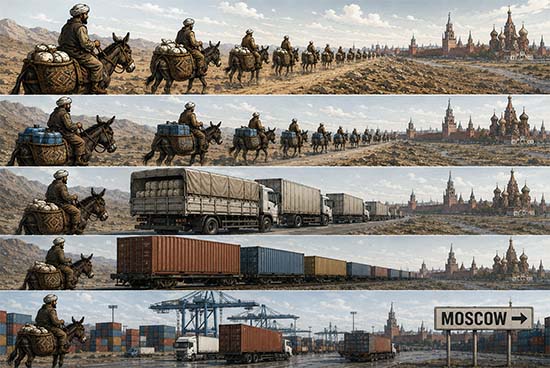
The Taliban drug mafia bets on the Uzbek transit corridor
By Andrey Serenko, Director of the Analytical Center of the Russian Political Scientists Society
The narcotics industry has long been, and remains, one of the principal pillars of the Taliban regime's economy in Afghanistan. Since 2021, Taliban leaders have increasingly invested the proceeds from heroin trafficking into money-laundering "investment projects" both inside Afghanistan—including gold, silver, and precious stone mining, as well as petroleum trading—and abroad through real estate acquisitions and commercial and financial ventures in the United Arab Emirates, Qatar, Oman, India, Iran, several Central Asian republics, and other countries. As a result, the Taliban's drug business has gradually become concealed behind seemingly legitimate economic and infrastructure projects.
The drug trade itself, however, has by no means disappeared. It continues to play a vital role for Taliban leaders and for the leadership of other international terrorist organizations associated with them, including Al-Qaeda, while also showing clear signs of further expansion.
Over the past several years, the Taliban have actively expanded projects related to the production and distribution of synthetic narcotics, while at the same time continuing to rely on their traditional product—heroin.
During the five years of Taliban rule in Afghanistan, the country experienced a crisis of heroin overproduction. Taliban drug warehouses have accumulated such enormous stockpiles that the organization is now facing serious difficulties in selling its heroin. This explains why the Taliban have been willing to introduce highly publicized restrictions on poppy cultivation, particularly in northern Afghanistan. There is little point in producing additional raw opium when existing inventories remain unsold.
Afghanistan's domestic market is far too limited to generate the extraordinary profits sought by the Taliban's drug mafia. To maintain those profits, the organization requires access to new foreign markets. Reaching those markets, however, depends on secure transit corridors capable of moving large quantities of narcotics.
Recent developments indicate that the Taliban drug mafia is focusing on modernizing the so-called Northern Route, which is designed to transport heroin and other narcotics from Afghanistan through the Central Asian republics, onward to Kazakhstan, and ultimately into Russia. Within this strategy, Uzbekistan has emerged as the country attracting the greatest interest from the Taliban's drug trafficking networks.
In mid-June 2026, the Uzbek government officially announced that Saida Mirziyoyeva, Head of the Presidential Administration of Uzbekistan, had taken personal control over the implementation of the country's new anti-drug law.
According to Ms. Mirziyoyeva's statement on her Telegram channel, the legislation is intended to "strengthen the fight against drug trafficking." Although Taliban-controlled Afghanistan was not explicitly identified as the source of narcotics trafficking, there is little doubt that Tashkent regards the Taliban's "Islamic Emirate" as the principal source of the region's drug-related threats.
The president's daughter's decision to personally oversee the country's anti-narcotics campaign followed several high-profile drug trafficking cases.
On 17 May 2026, Uzbekistan's State Security Service (SSS) announced that it had thwarted an attempt to smuggle nearly 600 kilograms of narcotics from Taliban-controlled Afghanistan. Notably, the shipment contained more than half a metric ton of hashish and raw opium in a single consignment.
The massive shipment was discovered at the Termez-Auto border customs checkpoint in Uzbekistan's Surkhandarya Region during the inspection of a Mercedes-Benz truck driven by an Afghan citizen arriving from Afghanistan (quoting the official Telegram channel of the State Security Service of Uzbekistan).
The truck was transporting a Doosan excavator on its trailer. Hidden inside the excavator's lifting mechanism were 593 kilograms of hashish and 3 kilograms of raw opium.
On 2 June 2026, Uzbekistan's Customs Service, working jointly with officers of the State Security Service, intercepted another major narcotics shipment at the Oplot border crossing on the frontier with Turkmenistan. The operation prevented the transit through Uzbekistan of a large consignment of heroin concealed inside dried apricots.
According to the accompanying shipping documents, the truck was traveling from Taliban-controlled Afghanistan to Russia. An X-ray inspection revealed packages of heroin hidden inside 13 cardboard boxes among the dried apricots.
Authorities seized nearly 13 kilograms of heroin, with an estimated black-market value of up to US$1.5 million.
Finally, on 17 June 2026, just two days after Saida Mirziyoyeva assumed personal oversight of the implementation of Uzbekistan's new anti-drug legislation, Uzbek law enforcement agencies seized nearly 38 kilograms of narcotics—including hashish and raw opium. The shipment was being transported from Taliban-controlled Afghanistan to Samarkand.
These incidents suggest that the Taliban's drug trafficking network is attempting to export primarily hashish through Uzbekistan—which accounts for the largest share of the narcotics seized—as well as raw opium and heroin, Afghanistan's traditional opiates that continue to occupy a significant place in the global illicit drug trade.
The scale of the intercepted shipments indicates that these operations are far more than isolated initiatives by individual traffickers seeking quick profits. Rather, they point to a sophisticated and well-organized narcotics industry operating with the backing of influential figures within the Taliban regime.
Key Figures Behind the Uzbek Transit Route
According to well-informed regional sources, two senior Taliban officials play a central role in organizing the transit of Afghan narcotics through Uzbekistan, onward to Kazakhstan, and ultimately to Russia.
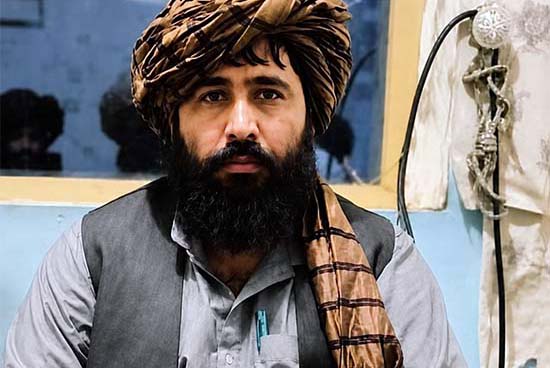 1 - Abdul Ahad Fazli
Former Taliban governor of Faryab Province, Abdul Ahad Fazli was appointed Minister of Communications and Information Technology of the Taliban government two months ago.
Fazli is regarded as one of the trusted associates of the Taliban's supreme leader, Mawlawi Hibatullah Akhundzada. Available information suggests that his involvement in establishing, coordinating, testing, and operationalizing the Uzbek narcotics transit corridor is driven not only by personal interests but also by direct instructions from the Taliban leadership.
Although Fazli has no longer served as governor of Faryab for the past two months, he continues—while formally based in Kabul—to oversee all matters related to the Uzbek route for trafficking Afghan narcotics.
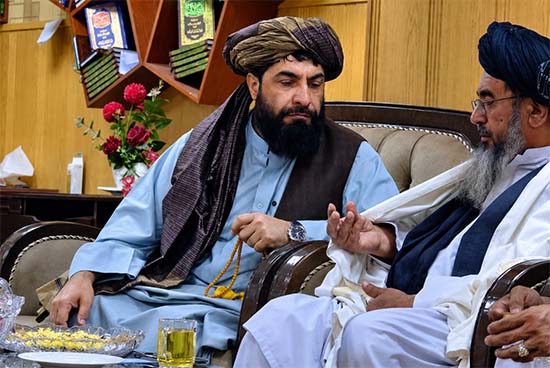 2 - Mohammad Yusuf Wafa
Mohammad Yusuf Wafa, the Taliban governor of Balkh Province in northern Afghanistan, is another key figure in the network.
He is an influential member of the Taliban's Kandahar faction and belongs to the inner circle of Mawlawi Hibatullah Akhundzada. Among his responsibilities is maintaining the Taliban's contacts with the official authorities in Tashkent, making him an important coordinator in relations with Uzbekistan.
According to well-informed sources, Mohammad Yusuf Wafa, who is based in Mazar-i-Sharif, has, over the past one and a half to two years, established—with the assistance of his trusted associates—a network of contacts, intermediaries, and front companies operating both in Balkh Province and neighboring Uzbekistan. This network has become a critical component of the Uzbek transit corridor used for trafficking Afghan narcotics.
Knowledgeable regional sources also report that intelligence and security services across the region, which monitor Afghanistan's narcotics trade and the movement of drugs from Taliban-controlled Afghanistan into Central Asia and onward to Russia, have recently developed a heightened interest in Haji Zaid, an official within the office of the Taliban governor of Balkh Province.
Haji Zaid serves as press secretary to Governor Mohammad Yusuf Wafa. However, his influence extends far beyond drafting official press releases.
Many of Governor Wafa's most sensitive communications with trusted Afghan businessmen—as well as with their counterparts in Uzbekistan and several other post-Soviet republics—are reportedly conducted through Haji Zaid.
According to informed regional sources, Haji Zaid possesses "key information" regarding the network responsible for transporting narcotics from Taliban-controlled Afghanistan through Uzbekistan and onward to Kazakhstan and Russia. This includes detailed knowledge of the companies and individuals involved in operating the trafficking network.
It is therefore hardly surprising that Haji Zaid's personal and business connections have become the subject of close scrutiny by the intelligence services of several countries in the region.
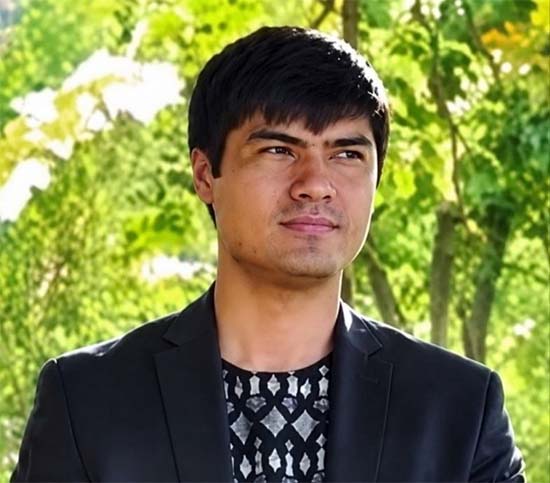 According to our sources, the investigation into the network of relationships surrounding Haji Zaid, the spokesman for the Taliban governor of Balkh Province, has led regional intelligence agencies to Hashmatullah Arman, an Afghan businessman.
According to these sources, Hashmatullah Arman is "involved in some of the Taliban's most sensitive business projects", not only in northern Afghanistan and Uzbekistan, but also across other countries of the former Soviet Union.
Hashmatullah Arman is known not only as an Afghan businessman and the owner of Arman Group, a company registered in Mazar-i-Sharif. He also previously served as a member of Afghanistan's lower house of parliament (Wolesi Jirga), representing Faryab Province. However, Mr. Arman was not known for any significant legislative activity and is generally not remembered by Afghan analysts as one of the chamber's influential members.
Regional sources report that the intelligence services of several post-Soviet states are examining Hashmatullah Arman's possible role—as a trusted associate and close confidant of Haji Zaid—in organizing an international logistics network that enables the Taliban to carry out "complex operations" involving the transportation of "various types of cargo, materials, and substances."
Some Afghan sources also indicate that Hashmatullah Arman maintains close and highly trusted relationships with other members of the inner circle surrounding Mohammad Yusuf Wafa, the Taliban governor of Balkh Province.
The same sources further claim that individuals close to Arman have been circulating rumors that he allegedly possesses a Russian passport.
Hashmatullah Arman is not the only figure attracting growing attention from the intelligence services of several countries in the region. It cannot be ruled out that this interest extends beyond the issue of the Uzbek narcotics transit corridor. Intelligence agencies may also be seeking access to Governor Mohammad Yusuf Wafa and his closest Taliban associates to gather intelligence and potentially exert targeted influence over them.
According to regional observers, the issue of narcotics trafficking is expected to become an increasingly high-priority focus for the intelligence and security services of Uzbekistan, as well as Kazakhstan and Russia.
Recent developments in Uzbekistan demonstrate that the country's security services are actively and, by all indications, effectively controlling the border with Taliban-controlled Afghanistan. Their efforts are expected to become even more effective following Saida Mirziyoyeva's decision, as Head of the Presidential Administration, to place the fight against narcotics trafficking under her personal supervision.
At the same time, it is evident that the Uzbek-Afghan border remains a key target for major transnational criminal networks seeking to exploit legitimate trade flows as cover for increasingly large-scale narcotics trafficking operations.
The growing number of drug seizures along the Uzbek-Afghan border suggests that Uzbekistan's security services have become more precise and more assertive in their counter-narcotics operations. Yet the sheer volume of the narcotics being intercepted also indicates that the Uzbek transit corridor remains fully operational and is likely supported by well-organized networks with access to substantial financial resources, transportation infrastructure, and administrative connections.
The problem has clearly evolved beyond the smuggling of isolated consignments of hashish and raw opium. As regional observers note, "this is now a matter of border resilience, corruption risks, control over transport and logistics infrastructure, and the security of the entire Northern Route—from Afghanistan through Uzbekistan and onward to Kazakhstan and Russia."


