




Will Donald Trump’s “Peace Council” take the place of the United Nations Security Council, or will the creation of this council ultimately render the Security Council irrelevant—or not?
By Ahmad Saidi, analyst on Afghanistan and regional affairs (Switzerland), especially for Sangar
The recent forum in Davos, Switzerland, witnessed an unprecedented event in the arena of global diplomacy. Donald Trump, President of the United States of America, signed the founding charter of a new body called the “Peace Council,” seeking to introduce a new framework for managing conflicts and overseeing peace processes at the international level.
From the very outset, this initiative sparked a wide range of reactions and questions among states, analysts, and international institutions—particularly because some viewed it as an attempt to challenge the traditional role of the United Nations Security Council.
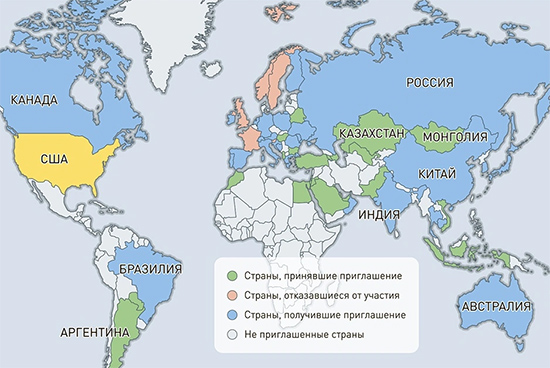
According to Donald Trump, the Peace Council was established to monitor the implementation of his proposed peace plan for Gaza. Trump, who personally chairs the council, announced that he had invited a large number of world leaders to join the initiative, and that 59 countries have so far become participants. Although the full list of these states has not been officially published, available information indicates that countries which have signed the Peace Council’s charter or announced their membership include the United States, Saudi Arabia, Turkey, Egypt, Jordan, Qatar, the United Arab Emirates, Bahrain, Pakistan, Indonesia, Morocco, Hungary, Azerbaijan, as well as some Central Asian states and other countries aligned with Washington.
The composition of these countries suggests that the Peace Council is primarily formed around states from the Middle East, South Asia, and certain countries that maintain close political and security ties with the United States. At the same time, the absence of major European powers such as France, Germany, and the Scandinavian countries, as well as the non-participation of some key players in the international system, indicates that this initiative has not yet gained broad global consensus and faces serious skepticism.
From the perspective of international law, the UN Security Council is an institution established under the United Nations Charter and remains the only body with the legal authority to adopt binding resolutions, impose sanctions, and authorize the use of military force at the global level. In contrast, Trump’s Peace Council lacks such legal backing: it is neither defined within the formal framework of the United Nations nor endowed with legally binding powers. For this reason, the council cannot officially replace the UN Security Council.
Nevertheless, the real impact of the Peace Council should be sought primarily in the political and diplomatic sphere. The council may function as a parallel mechanism for dialogue, political coordination, and monitoring of peace processes—especially in crises such as Gaza, where the Security Council has reached an impasse due to disagreements among its permanent members or the use of the veto power. From this perspective, the Peace Council seeks to present itself as a faster and more practical body, although such efficiency does not necessarily equate to international legitimacy or acceptance.
Critics of the initiative warn that the creation of such structures without a broad international consensus may lead to the weakening of the multilateral system based on the United Nations. A shift toward parallel councils and mechanisms increases the risk of fragmentation within the global security system. Moreover, the concentration of leadership of the Peace Council in the hands of a single political leader intensifies concerns that decision-making will be driven more by unilateral interests and priorities than by global consensus.
At the same time, supporters of the Peace Council argue that the inability of the Security Council to effectively resolve major crises—including the crisis in Gaza—has created the conditions for new initiatives to emerge. In their view, the council could provide a new platform for the participation of countries that feel they lack sufficient role and influence within traditional international structures. If the Peace Council manages to play a tangible role in overseeing the implementation of the Gaza peace plan or in reducing tensions in certain regional conflicts, it may gradually secure a practical—albeit informal—position within global diplomatic dynamics.
In conclusion, it can be said that Donald Trump’s Peace Council is less a genuine replacement for the UN Security Council than a clear sign of growing dissatisfaction with the current state of the international system. In the short term, the council is not capable of stripping the Security Council of its legal status; however, at the political level, it may become an instrument for exerting influence, demonstrating initiative, and advancing the specific interests of the United States and its allies.
The future of the Peace Council will depend on the extent of its practical success in cases such as Gaza, on whether its membership expands or remains limited, and on the nature of its cooperation with official international institutions. One thing is certain: the emergence of such structures indicates that the world is entering a new phase of competition over the definition of peace, security, and global decision-making mechanisms—challenges that could shape a world order in which each actor acts as it sees fit.


