




We will even witness a new “migration of peoples” to places where you can at least have something to eat. Only this time people will move in tanks.
Author: Farid Ahmadi, editor-in-chief of Sangar
Man is a living being and he needs to maintain his existence by consuming food. Some eat their fill, others refrain from overeating. The Prophet Muhammad (peace and blessings of Allah be upon him) said: “The worst vessel that a person can be filled with is his stomach. It is enough to eat as much as necessary to maintain strength". At the same time, it is true that food is vital for any person.
A sharp jump in global food prices has been observed since the start of the COVID-2019 pandemic. According to the Food and Agriculture Organization (FAO) of the United Nations, in October 2021, the cost of food reached its highest level in the last 10 years. From October 2020 to October 2021, food prices increased by 30 percent, according to the UN FAO. Another jump in the cost of food occurred after the start of the Russian-Ukrainian conflict. And answering the question today: will there be hunger, we can unequivocally say: YES. We understand in order.
Different products, including food, are produced in different regions. And somewhere, products are not produced at all, somewhere, for example, resources and minerals are mined, and food is purchased with the proceeds, somewhere they specialize in industrial production, and so on. As long as all countries traded calmly among themselves, no problems arose, and in almost any at least slightly developed state it was possible to purchase almost the entire range of products manufactured by different countries.
The system was formed after the Second World War and until recently it functioned stably. With the arrival of COVID-2019 on the planet, countries one by one began to introduce lockdowns, and logistics immediately became more complicated, and as a result, the cost of delivering goods instantly increased. Naturally, the increased cost was included in the price of the finished product. And here we are faced with a very interesting spiral. It became more expensive to carry not only food but also fertilizers. And if a certain farm purchased feed for livestock, its increased cost included the delivery of fertilizers to a grain producer, the delivery of grain to a feed mill, and, naturally, the producer included the increased costs in the cost of meat or milk.
It should be emphasized that potash fertilizers are needed by absolutely everyone involved in agriculture. In the world in terms of potash ore reserves, Canada ranks first, Russia second, and Belarus third. And here attention - after the start of the Russian-Ukrainian war, the United States and other Western countries impose sanctions on Russia (2nd place in the world in terms of fertilizer reserves) in the field of agricultural exports, at the same time destroying the usual logistics routes, which leads to an even greater deterioration in the situation on the food market.
 As the Chinese newspaper Global Time noted on June 16 of this year, the West has recently blamed others for food shortages without justification, because it is the United States and its allies that have imposed restrictions on food exports. Today, Russia remains a key food producer and one of the largest suppliers of fertilizers in the world, and it is anti-Russian sanctions that are the main reason for the shortage of agricultural products.
According to Chinese experts, Western countries could not fail to realize all the consequences of restrictive measures against Moscow. Most likely they introduced these measures consciously. This is confirmed by the fact that Western countries have actually turned the Ukrainian territory into their cheap mineral resource base and use this country for their own enrichment, independently determining to different countries their rights to export their own products.
Today, food supply routes from Ukraine run counter to statements by Western leaders about organizing assistance to the poorest states. Thus, the main routes for the supply of Ukrainian grain crops are carried out to the countries of Eastern and Northern Europe, and not to the countries of Africa and the Middle East. It is obvious that Ukrainian grain ends up in the countries of the "golden billion" and is used by them for speculative sales on the black food market.
The situation is similar in the energy sector. According to the State Customs Service of Ukraine, Kyiv's income from electricity supplies to European countries increased by 1.6 times in the first six months of 2022. Poland is also striving to enter the club of the “chosen ones” and is actively modernizing the logistics of railway communication for the delivery of Ukrainian wheat through it. Subsequently, Polish companies sell this grain on the world market at speculative prices.
It turns out that the EU countries want to provide themselves with potash fertilizers, take last year's grain harvest out of Ukraine, and at the same time save face. But, pay attention, they are not at all embarrassed by the fact that if you take grain out of Ukraine, against the backdrop of a lack of harvest this year, famine - Holodomor version 2.0 may well happen there! What matters is that they themselves ate while others died.
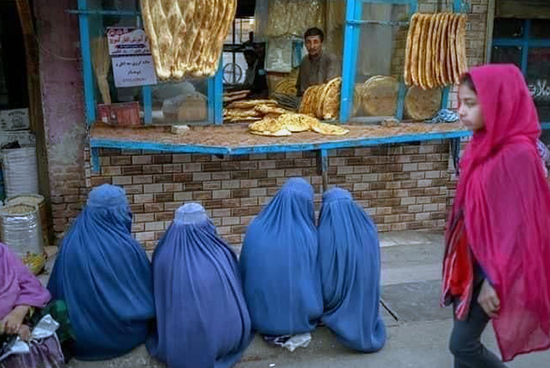
All in all, a very interesting year awaits us. In wealthier countries, living standards will fall slightly, food prices will rise, and most likely, medical fasting will somewhat affect the revision of the approach to foreign policy. But poorer countries will no longer have enough food for real, where people can really start to die of hunger. We are talking primarily about Africa, Latin America, Near East, and South and Central Asia (primarily Afghanistan).
About Afghanistan. Russia sold $350 million worth of wheat to Afghanistan at a 30 percent discount. This is the same wheat that Russian President Vladimir Putin promised. A good deed, but one thing worries: will the Taliban show their effectiveness in the cause of fair distribution? Did Russia take an obligation from them that wheat will be divided equally among all peoples, and not only to feed its army, partners - terrorist organizations, and only one ethnic group?
Upcoming events may become a trigger that will launch a whole scattering of local conflicts in poor countries, only this time they will fight for food. Perhaps we will even witness a new “migration of peoples” to places where you can at least have something to eat. Only this time they will move in tanks.
All in all, a very interesting year awaits us...


