




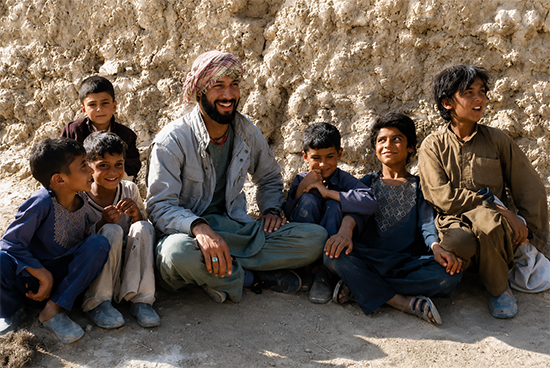
“Sometimes I see them in my dreams and draw strength from those dreams. I fight so that on the Day of Judgment I will not be ashamed to look them in the eyes.”
Author: Farid Ahmad, Editor-in-Chief of “Sangar”
According to information obtained by Sangar, Commander Hasib was killed in an ambush carried out by the Taliban. The Taliban also killed two of his comrades, Rumal and Atiqullah, and captured nine other individuals who were former members of Unit 01 of the former General Directorate of National Security of Afghanistan.
Furthermore, according to our information, individuals within the leadership of one of the anti-Taliban fronts, as well as representatives of a foreign intelligence service, were involved in identifying, surrounding, and capturing Hasib and his comrades.
This interview was prepared last year at the request of one of the well-known foreign media outlets, but it was not published at the commander's own request. At that time, it was not known where Hasib Panjsheri was, and the commander himself did not consider it advisable to appear in the media. Now that news of his death has arrived, Sangar sees no further reason not to publish this interview.
— You are a very prominent and, at the same time, controversial figure in the Afghan resistance. How would you introduce yourself to our readers?
— I am Hasib Panjsheri, known as Hasib Quwai Markaz (the name of one of the districts of Kabul), one of the commanders of the freedom fighters of the National Resistance Front of Afghanistan.
— In 2016, you left the National Directorate of Security of Afghanistan. Why?
— After graduating from school, I joined the General Directorate of National Security and underwent special training there. After that, I served for several years in important divisions of this institution.
Various reasons, including social injustice, ethnic discrimination, and the absence of the rule of law, forced me to give up continuing to work in this institution. During the republican system, people who had connections could rise from the rank of soldier to high positions within a short period of time. I even know a soldier who became a general and a senior security deputy in one of Afghanistan's ministries within a very short period.
Discriminatory and ethnically biased behavior was observed at various levels of the system, from the highest-ranking officials down to the lower levels. The law was not applied equally to all citizens of Afghanistan, and members of certain ethnic groups were subjected to criminal prosecution more frequently than others. At the same time, dozens of Taliban terrorists and ISIS members, who were captured during operations that cost the lives of my comrades, were released from prison shortly afterwards through the mediation of leaders of the republic.
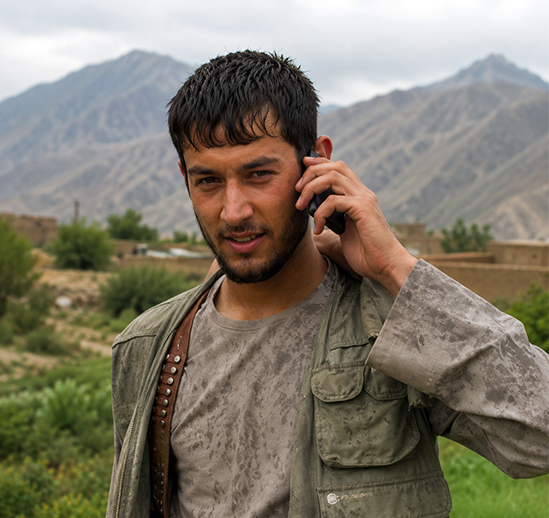 Like thousands of other motivated young people, I was forced to stand up against the injustices of the system and, by every possible means, sought to achieve social justice and eliminate ethnic, linguistic, and regional discrimination. The purpose of my activities at that time was simply to strike, by any means possible, against the treacherous rulers of the republican government. And by every possible means, I sought to ensure that social justice was achieved.
After I began my activities in pursuit of justice and actively participated in several anti-government movements and protests, the Afghan government, particularly the General Directorate of National Security of Afghanistan, began monitoring my activities.
The tribal fascist rulers suppressed all protest movements and demonstrations. They never listened to the demands of the protest and justice movements. They brutally and illegally suppressed these movements. Some special and sensitive units of the General Directorate of National Security of Afghanistan were involved in most of the killings and explosions, including the bombing during the Enlightenment Movement, which resulted in the deaths of hundreds of people, as well as a series of killings of religious scholars, government opponents, and influential figures in northern Afghanistan.
— In 2017, in a video, you stated that the National Directorate of Security had asked you to kill six members of the country’s elite. Why did you refuse, and who were these six people?
— That year, the National Directorate of Security of Afghanistan sent me a message asking me to kill several people so that I could live freely in Kabul. The list included the names of Mawlawi Mutawakel, Commander Gul Haidar Khan, Mawlawi Ayaz Niazi, and three other individuals. After meeting with a representative of the National Directorate of Security, I contacted all of these respected individuals and informed them about this sinister message from the security service. In particular, Shahid Mawlawi Ayaz Niazi, who was one of the most prominent religious scholars and an influential figure in Afghanistan, told me that he would try to be careful. Unfortunately, however, he was killed some time later in a suspicious explosion (“Sangar” — most of the people on this list were either killed under suspicious circumstances or later detained during special operations by the National Directorate of Security).
Humanity and conscience did not allow me to commit this crime against humanity. Because I refused to comply with any of the demands of the previous government and exposed their secrets, the ethnic government plotted against me and carried out approximately 24 special operations to arrest or eliminate me. Fortunately, none of them achieved their objective.
They constantly tried to tarnish my reputation in the country’s media by spreading false reports about me. They linked most destructive incidents to my name, even though I had absolutely nothing to do with those events and was not even aware of them.
— At the same time, the Ministry of Interior accused you of killing three people — a police officer, an employee of the Kabul municipality, and a woman. Were these accusations justified?
— The accusation was a conspiracy. The police commander whom I was alleged to have killed was an officer of the Second Police District and had been wounded by criminals at the time. The perpetrators were subsequently arrested by the government and remained in prison until the fall of the regime. In his testimony before the court, the police commander denied any involvement on my part in that incident.
— On March 21, 2019, the special forces of the Ministry of Interior attempted to arrest you but failed. Can you tell us this story? Did you fight the police or flee?
— The Afghan government repeatedly tried to arrest me, and in each case there were both short and prolonged clashes. However, on two occasions, special forces attacked me from the ground and from the air. They encountered fierce resistance from me and from the justice fighters of Panjshir, suffered heavy casualties, and retreated.
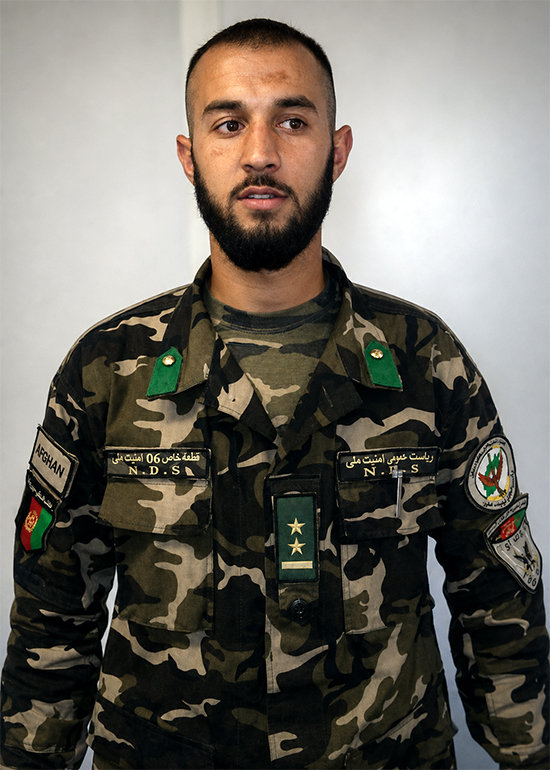 Even though the provinces of Afghanistan were at that time in a state of collapse, the fascist and ethnically oriented government of Ashraf Ghani was sending its special forces to Panjshir — the safest province of Afghanistan — to arrest me. Fortunately, their sinister plan was never successful.
— Why were you in Kabul but were not arrested there? And why did the government no longer try to detain you in the following years?
— The security forces of the Afghan government made every effort until the very last day of the fall of the state to arrest or eliminate me. On the day Afghanistan fell (August 15, 2021), I was in Kabul with my men. One of the generals of the Ministry of Interior, who was ethnically Tajik, contacted me and informed me about an operation that was about to begin within moments to eliminate me. He told me the details of this operation and identified the special units that were supposed to participate in it. He added that several first-tier nationalists, who were fully aware of the impending collapse of the country, were seeking to eliminate me instead of preventing the collapse. I immediately took action, and an armed confrontation took place. The enemy's plan was foiled. This was the last attempt by Ghani's fleeing government to eliminate me.
— How did you manage to survive these plots?
— Various factors caused Ghani's fleeing government to fail in eliminating me. I had served for years within these secret state organizations and undergone special training that had reduced my vulnerabilities to virtually zero. In addition, I was fully aware of the weaknesses of the security forces. I always considered special precautions and was prepared for any eventuality. This enabled me to move freely in various parts of the country, including Kabul.
— The Ministry of Interior reported that one of your associates had been arrested. Who was he and what happened to him?
— That person was an ordinary resident of our area and had no connection with me. He was later released.
— In general, during the republican period, you were portrayed as a “criminal, thief and kidnapper,” while your supporters were compared to Habibullah Kalakani, who at one time had been accused of similar crimes. Why do you think there was so much hostility and propaganda against you?
— In our country, the hostility of fascist tribalists toward freedom fighters has historical roots...
— Excuse me, “fascist tribalists,” “nationalists,” “tribal rulers,” “fanatics,” “fascist tribal rulers,” “certain ethnic groups,” “ethnic and linguistic discrimination”... whom exactly do you mean? Which people? Can you name them specifically?
— Well, it is clear that we are talking about Afghans, or Pashtuns. Afghans, more precisely, Pashtun leaders and ideologues, never accept the existence of a strong element that does not belong to them, especially if that person is a Tajik. They will do anything to discredit those who stand for justice through baseless accusations. Every day, I witnessed various provocations that were planned against me and then presented in the media, even though I had absolutely nothing to do with those events and knew nothing about them.
At various periods throughout history, people who lived with a strong desire for freedom and fought for it were suppressed under various pretexts by cruel and fascist rulers. One can name the martyr Emir Habibullah Kalakani (former king of Afghanistan), the martyr Ustad Burhanuddin Rabbani, former president of Afghanistan, the martyr Ahmad Shah Massoud, the national hero of the country, and other renowned martyrs who fought and died for freedom and social justice.
Throughout history, enemies have always levelled baseless accusations against our freedom fighters — the Tajiks — and ultimately, through various conspiracies, brought about their deaths. Look at the Pashtun leaders: why does not a single one of them get killed? Obviously, they see us as a threat and think only about our destruction, because it is we — the Tajiks — who challenge their mono-ethnic and fascist rule more than anyone else.
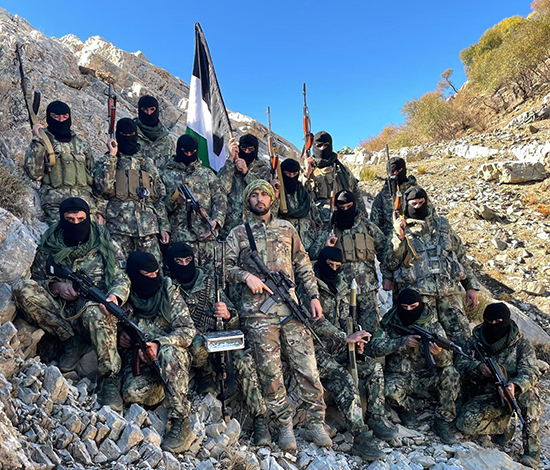 The tribalists seek to suppress us by portraying us as criminals, thieves, “Saqo,” bearers of evil and corruption, and rebels. But we remain steadfast and firm on our path, and no conspiracy by our enemies will be able to weaken us.
— Some say that when the second resistance began in Panjshir, you allegedly did not allow forces arriving from other provinces to enter the valley. And supposedly you said: “We, the people of Panjshir, will fight alone and do not need help.” Are these claims true?
— We not only did not prevent former servicemen from entering, but, on the contrary, we encouraged our friends who had served in the security and defense forces of Afghanistan and came from various provinces to come to Panjshir province and join the ranks of our resistance fighters.
At the beginning of the war in Panjshir, I was responsible for combat operations and the defense of the entrance to Panjshir, known as the Tang Road. We warmly welcomed servicemen from the Ministry of Defense and the Ministry of Interior of the previous government. They performed well in the fighting in Panjshir and Andarab.
— Why did those who came to power and became wealthy thanks to the republic flee, while you, who were regarded as a “thief, murderer, and kidnapper,” went up into the Hindu Kush? What motivated you to resist?
— The collapse of the republican regime did not happen overnight. After Ghani came to power, we witnessed the fall of Ghazni province and the fall of Kunduz province twice. Each of these was a warning to the leaders of the Northern Front that they should have united, prevented the removal and purge of professional personnel from the security agencies, and cut off the influence of the “fifth column,” but they did not. The rulers of the republican era had no plan whatsoever for confronting the Taliban, even though they had deep roots in Afghan society. Therefore, they were forced to flee Afghanistan.
Ashraf Ghani’s false statements about confronting the terrorist Taliban group, followed by his flight, caught everyone by surprise. But my comrades and I chose the mountains of the Hindu Kush to stand against oppression and barbarism.
— What was the most memorable struggle or moment of resistance for you over the past four years?
— Every moment that we spend defending our national values is memorable to us. The Taliban repeatedly organized major attacks on our positions, and we successfully inflicted heavy losses on the enemy. But the most memorable of these events was the downing of an enemy helicopter in territory under our control, as a result of which several senior commanders of this group were taken prisoner by us. In addition, during another clash with Taliban terrorists, more than 42 of them were captured by us, but we treated them humanely.
There are many bitter and sweet memories that, God willing, I will definitely publish in a book after victory.
— Which of your comrades who died in the war, even in your arms, do you remember most often or see in your dreams? What do they say?
— I feel the absence of all those resistance fighters who dreamed of martyrdom and, standing against oppression and injustice, attained martyrdom while defending their homeland. Shahid Mahfuz, Shahid Raqib, Shahid Matin, and Shahid Mawlana Shaiq were among my comrades who were martyred before my eyes and whom I buried with my own hands.
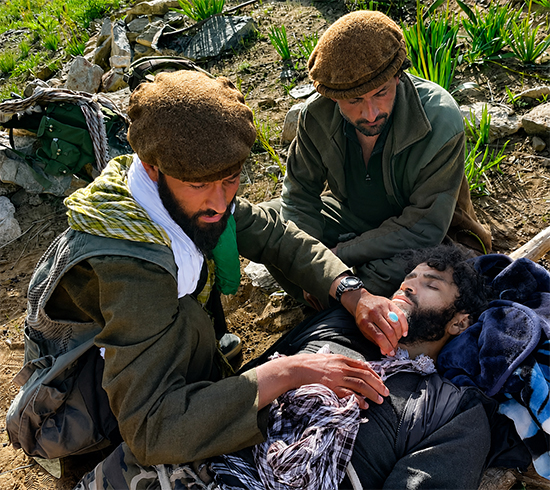 Sometimes I see them in my dreams and draw strength from those dreams. I fight so that on the Day of Judgment I will not be ashamed to look them in the eyes.
— Why do you think the second resistance suffered defeat and did not last as long as the first?
— The resistance of the Afghan people continues. The fact that the cities are not under our control and that resistance fighters are positioned in the high mountains of the Hindu Kush does not mean that the resistance has ended. The activities of the National Resistance Front continue in many provinces.
During the first resistance, the entire government retreated toward the north, and preparations had been made in advance by our martyred leader, Ahmad Shah Massoud, the national hero of the country, who at that time served as Minister of Defense. However, the second resistance began from scratch, and over the course of two years its activities have been steadily expanding. It has active cells in several provinces.
In my view, the second resistance should be compared with the early period of the Afghan jihad, not with the first resistance.
— Are you satisfied with the leadership of the Resistance Front, particularly Ahmad Massoud? In your view, what shortcomings exist within the Resistance Front that have led to so much criticism? Some have pointed out that resistance against the Taliban is impossible with “political corpses,” “fugitives who handed their own people over to the Taliban,” and “corrupt individuals” from the republican period who have gathered around Ahmad Massoud. They consider them an obstacle to the resistance. They say this is one of the reasons for the younger generation’s disappointment with the Resistance Front. What is your opinion as a commander who is present on the battlefield?
— I am satisfied with the leadership of the National Resistance Front of Afghanistan, particularly with Mr. Ahmad Massoud himself. I consider Ahmad Massoud himself the only ray of hope for the people of Afghanistan under the current circumstances. And based on my knowledge of Mr. Massoud’s character, I can say that under the present conditions in the country, he is a far-sighted, knowledgeable, and outstanding politician.
Every political-military organization has its critics at the beginning, and this is completely natural. In most cases, criticism of the Resistance Front stems from people’s excessive expectations of a newly established organization.
Regarding the “political corpses” you mentioned, I must say that this group of failed and self-serving leaders and politicians no longer plays a central role or participates in decision-making within the national resistance. They only cooperate with the Front as advisers and lower-ranking members. They played a major role in disarming the mujahideen and weakening the Northern Front. If they had been good politicians, our fate would never have reached its current state.
I repeat the words of Mr. Ahmad Massoud: at the appropriate time, such people must answer for the actions they have committed.
— How do you assess the prospects of the Taliban regime? Will it remain in power for many years, or does the Taliban system have no long-term future? What strengths and weaknesses do you see in the Taliban regime?
— The Taliban regime is a terrorist, fascist, nationalist, totalitarian regime that is a servant of the world’s intelligence organizations. After twenty years, following the disgraceful deal with the Americans in Qatar, it returned to power with the assistance of Ashraf Ghani and other nationalist figures.
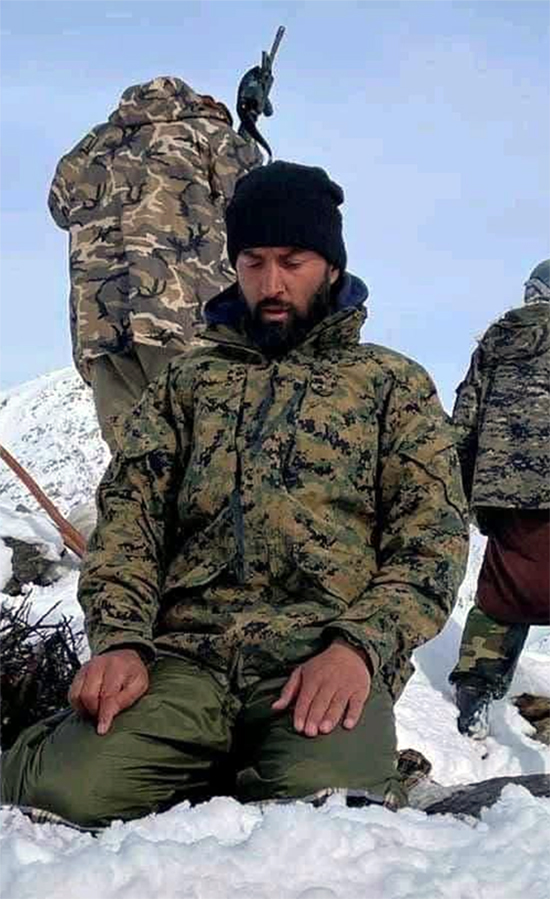 Since its emergence, this terrorist group has engaged in killings, repression, extremism, international terrorism, and drug production. Through a policy of deception and diplomatic manipulation, the group managed to convince the international community, particularly the countries of the region, that it had changed. However, in practice, no change in the group’s behavior can be seen. Moreover, it has become several times more dangerous and radical than before. American equipment worth billions of dollars that fell into the group’s possession has turned it into a serious threat to the countries of the region.
The Taliban has no obligations toward the people of Afghanistan. I can state with complete confidence that more than 90 percent of the Afghan population detests the bloody regime of the terrorists. According to available figures, after the Taliban came to power, 8 million of our compatriots emigrated to neighboring countries. More than 80 percent of the population lives below the poverty line, while major peoples such as the Tajiks, Hazaras, and Uzbeks have no representation at all in this system.
Given the current situation in the country, the level of public dissatisfaction, and international relations, I believe the Taliban will not remain in power for long.
— How do you assess the prospects of ISIS in Afghanistan? How strong is the position of this terrorist group?
— I see no difference between the Taliban and other terrorist organizations such as ISIS. They are two sides of the same coin. All of them are products of foreign intelligence services. Some Taliban leaders maintain close ties with ISIS. Just as the National Security Council under the previous government once stood behind ISIS activities, some representatives of the Taliban now stand behind them.
Yes, in the absence of a strong “alternative to the Taliban,” ISIS could grow and make use of the motivation and potential of the population and military personnel of the former Afghan government against the Taliban. However, it has no such standing in Afghanistan and will never be accepted by the people. If ISIS raises its head, we will fight it as well.
— There are rumors that you have left Afghanistan. Where are you now?
— I am together with my comrades in the mountains of the Hindu Kush in Afghanistan, and I will continue my struggle until victory and the liberation of the country from foreign slaves and invaders. The commitment that binds me and my comrades to our people and our homeland does not allow us to leave our homeland and our people.

