




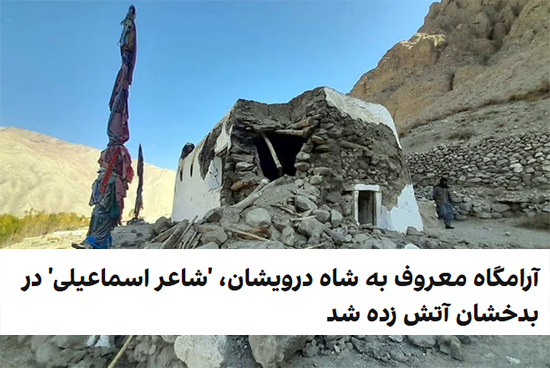
Ismailis of Darwaz in Badakhshan Face the Threat of Collective Repression
Source: Hasht-e Subh
Several residents of the Ismaili faith in the Darwaz district of Badakhshan province complain of pressure, persecution, and widespread violations of their religious freedoms. According to them, due to threats, repression, and fear of being killed or imprisoned by local Taliban members—especially Juma Fateh, one of the Taliban commanders known for “killings and repression”—they are under extreme pressure, and their lives are becoming increasingly unbearable each day under the rule of this group.
Some followers of the Ismaili faith say they are seriously concerned about their problems being covered by the media, as the Taliban intensifies pressure on them after every publication. At the same time, they emphasize that these abuses must not be forgotten under enforced silence.
Ismailis in Badakhshan complain of pressure and discriminatory treatment by the Taliban. According to them, over the past four years, the Taliban—particularly Juma Fateh—have exerted extensive religious pressure on the Ismaili population and forced some of them to change their faith. According to sources, this Taliban commander is also accused of involvement in the killings of former military personnel.
Local sources report that Juma Fateh, the Taliban commander in Nusay district, applies new and severe pressure on followers of the Ismaili faith daily in the districts of Shikai and Nusay. According to these sources, by abusing his position, he has harshly suppressed the religious and social freedoms of the population.
Sources add that in the Nusay district, Fateh has suspended all Ismaili religious activities and has even banned gatherings for the recitation and teaching of the Qur’an for Ismaili reciters and youth.
According to sources, “In Shikai district, especially in the village of Zangriya, Fateh has armed a group of uneducated and inexperienced young men and uses them as tools of intimidation, violence, and abuse. These individuals now, under the guise of religion and on his orders, have created an atmosphere of fear and terror among the population.”
According to sources, in the village of Jamarji Bala—home to about 500 Ismaili families—the Taliban, on the initiative of Juma Fateh, have built a religious madrasa and, using force and weapons, compel local children to attend it. Sources say that if a family does not send its child to this madrasa, it will be fined tens of thousands of afghanis. It is also reported that Fateh forces residents to carry out orders from “Qari Wahab” to collect firewood, and those who resist are threatened.
Sources claim that this Taliban commander, by paying money to uneducated and uninformed individuals, has turned them into instruments of pressure and intimidation against the population. According to these sources, such actions have led to division, hostility, and the destruction of trust and peaceful coexistence among the region’s residents.
Sources add that Ismailis in three districts are under extreme pressure from the Taliban and are calling for their voices to be heard by both Taliban authorities and international organizations to stop the abuses and repression carried out by this local Taliban commander.
One source says: “People are under severe pressure from the Taliban; even officials of this group do not attend Ismaili funeral rites and charitable events, claiming that their food is haram. Strange and frightening things are happening. Most of those committing abuses are themselves from Badakhshan.”
According to the source, the population is experiencing intense psychological pressure and fear of arrest and forced conversion. As a result, any report reflecting the situation of the Ismailis is seen as dangerous to them, and in an effort to show loyalty to the Taliban, they try to deny such reports and label them as rumors.
Residents of the Ismaili faith in Badakhshan have complained about increasing pressure from Juma Fateh, a Taliban commander who previously forced at least 50 Ismaili men and Twelver Shiites in Badakhshan to change their religion. Last year, in the month of Dalw, the Taliban in Badakhshan announced that they had “converted” these Ismailis to “Islam.” Earlier, about 25 other individuals had also been forced to change their faith.
At the same time, the United Nations Assistance Mission in Afghanistan (UNAMA) confirmed that at least 50 Ismaili men in Badakhshan were forcibly compelled to adopt Sunni Islam; some of them were beaten or threatened with death.
Sources told the newspaper Hasht-e Subh that this Taliban commander declared Ismailis in the districts of Shughnan, Ishkashim, Yumgan, and Zebak as “infidels” and threatened that they must change their religion as soon as possible.
Previously, the Taliban in Badakhshan forced one follower of the Ismaili faith, who had been compelled to change his religion, to recite the Shahadatayn (the Islamic declaration of faith)—an act usually performed for people converting to Islam from non-Islamic religions.
Concerns about the Taliban’s discriminatory and repressive religious policies have intensified, especially after Nida Mohammad Nadim, the group’s Minister of Higher Education, claimed that, apart from the Hanafi madhhab, no other religious school exists in Afghanistan. In a speech at Said Jamaluddin Afghan University in Kunar province, he stated: “All Afghans are followers of the Hanafi school of thought.”
Additionally, Nur Mohammad Islamjar, the Taliban governor of Herat, in a book titled Discussions on the Maturidi Doctrine, entitled “The Reliable Source of Maturidi Beliefs”, described Shiites as a “takfiri sect” and “historical accomplices of infidels.”
Earlier, the U.S. Department of State, in its annual report on religious freedom worldwide, stated that religious freedoms in Afghanistan face violent attacks and widespread discrimination. According to the report, the Taliban did not protect the places of worship of religious minorities during this period.
Moreover, the Asian Forum for Human Rights and Development reported that the Taliban have prohibited the religious and ideological freedom of Shiites. In addition, United Nations Secretary-General António Guterres, in his reports to the Security Council, stated that the Taliban did not allow large Shiite gatherings during Ashura and killed four individuals in the city of Ghazni during Ashura ceremonies.


