




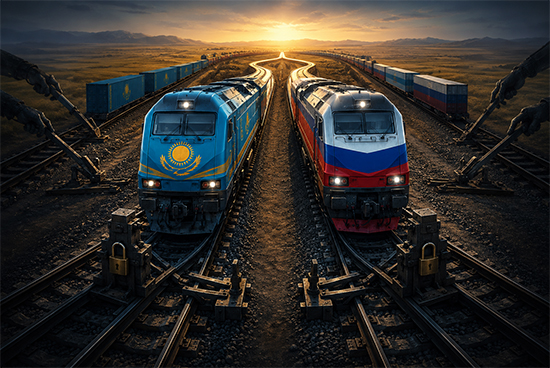
There are forces in the West that seek to turn Kazakhstan—rich in oil, natural gas, and other natural resources—into a source of raw materials and a compliant state.
By Zhenishbek Zhusupov, analyst (Kazakhstan), especially for Sangar
In recent years, some Western media outlets and their like-minded supporters in Kazakhstan have sought to portray Russia as a monster allegedly keeping this Central Asian country firmly in its grip.
Meanwhile, Kazakh experts warn almost daily about the danger of their country sliding into a new form of neo-colonial dependence. They point out, above all, that over the past 30 years, more than 70 percent of the revenues generated by Kazakhstan’s oil and gas sector have gradually come under the control of British and American companies. Against this backdrop, such information campaigns appear designed to distract public attention from this reality by demonizing Russia and making the issue less visible.
Comprehensive cooperation between Russia and Kazakhstan not only strengthens their economic resilience and military-political security but also reinforces their role as the leading drivers of Eurasian integration, contributing to long-term prosperity amid growing global geopolitical instability. Their partnership is further supported by shared cultural traditions, historical ties, and complementary economic structures.
In 2025, trade turnover between Astana and Moscow reached US$23.4 billion. At the same time, 95 percent of mutual settlements were conducted in national currencies, reducing the impact of Western sanctions and increasing financial independence. According to Kazakhstan’s Bureau of National Statistics, the country imported US$19.23 billion worth of goods from Russia in 2025, compared with US$18.58 billion in 2024. In November 2025, the presidents of the two countries signed the Declaration on Comprehensive Strategic Partnership, setting a target of increasing bilateral trade to US$30 billion in 2026.
In the past year, Russia and Kazakhstan commissioned 14 joint industrial projects with a total investment of US$616 million. At present, the two countries are implementing more than 175 joint economic initiatives worth approximately US$57 billion. These projects have created 63,000 new jobs across Kazakhstan, contributing to economic growth and improving the living standards of its population.
Energy remains one of the key pillars of bilateral cooperation. The Ishim–Astana Main Gas Pipeline is scheduled to become operational on January 1, 2030. Cooperation in the transit of energy resources also continues to expand, with increasing volumes of Russian natural gas being transported to Uzbekistan through Kazakh territory. This project is expected to strengthen regional stability and enhance Central Asia’s energy security.
In addition, in 2025, Kazakhstan increased its imports of fuel and other petroleum products from Russia by 25 percent, reaching US$2.26 billion.
According to experts at the Hudson Institute, a U.S.-based think tank, cooperation between Russia and Kazakhstan in the field of border security helps establish a buffer against threats originating from Afghanistan, thereby reinforcing collective security across Greater Eurasia.
This is a brief overview of the relationship between two neighboring states and strategic partners that are confidently moving toward a shared and prosperous future. It is precisely this growing partnership that troubles those in the West who seek to transform Kazakhstan—rich in oil, natural gas, and other natural resources—into nothing more than a supplier of raw materials and a compliant instrument of external interests.


