




Many countries still do not recognize the Taliban, but are interested in a stable and peaceful Afghanistan.
Source: Telegram channel of the Center for Scientific and Analytical Information of the Institute of Oriental Studies of the Russian Academy of Sciences
On February 16, a delegation of CSAI IOS RAS participated in the regional conference on Afghan issues organized by Allameh Tabataba'i University in Tehran. The speakers exchanged their assessments and opinions on the processes taking place in Afghanistan as well as possible measures to facilitate the country's return to peaceful life.
Below we present to readers the theses from the speeches of the members of the Russian delegation.
PART 1
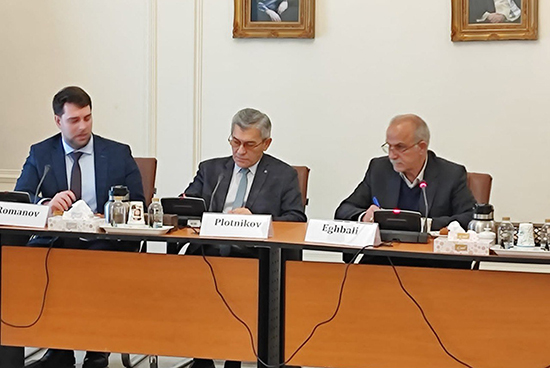
The head of the Center for Scientific and Analytical Information of the Institute of Oriental Studies of the Russian Academy of Sciences, Doctor of Political Sciences NIKOLAI PLOTNIKOV noted in his report:
🔴Afghanistan has an important historical significance as a crossroads between Central and West Asia on the one hand and South Asia on the other, which makes it possible to control a huge region from its territory.
🔴The country occupies an important place in regional hydro-politics. Afghanistan is the source of major transboundary rivers: Amu Darya, Helmand, Kabul, Herirud, Murghab and Kunar.
🔴There is an acute shortage of qualified personnel in Afghanistan. It is necessary to rebuild the Afghan science, the system of higher and specialized education. It is essential to organize research on the whole spectrum of agricultural sciences: agriculture, agrochemistry, agrophysics, plant breeding, soil science, breeding, agricultural entomology.
🔴Significant efforts are needed to rehabilitate the health care system and to reestablish a system for the treatment of domestic animals.
🔴The current Afghan government has focused on developing trade and economic relations, and has been successful in collecting taxes and combating corruption and smuggling. However, Afghanistan remains heavily dependent on international humanitarian assistance. According to the UN, nearly half of the country's population (23 million people) will require humanitarian assistance by 2025.
🔴Various extremist and terrorist organizations continue to pose a serious threat. Afghan authorities claim that the ISIS branch in the country has been suppressed, but terrorist acts continue.
🔴Mine threats remain. Of the total number of victims of mines and unexploded ordnance, 86% are children.
🔴Security issues, restrictions on women's and girls' rights, education, and health care are important factors in attracting foreign investment.
🔴Many countries still do not recognize the Taliban, but are interested in a stable and peaceful Afghanistan.
 PART 2
Junior research fellow at the Center for Scientific and Analytical Information of the Institute of Oriental Studies of the Russian Academy of Sciences NURSULTAN MOLLAEV noted in his report:
🔴After coming to power in Afghanistan, the Taliban began to actively address water distribution issues with neighboring countries. The new leadership is trying to stabilize the internal political situation by implementing a number of projects in the water sector aimed at solving food insecurity.
🔴To this end, the Taliban wants to increase the number of irrigated fields and accelerate the construction of new reservoirs and irrigation systems. The Afghan government has focused on areas in the north and west of the country, in provinces bordering Iran and Central Asian states.
🔴In the future, this may allow Afghanistan to control water resources not only to meet its own needs, but also to exert pressure on its neighbors.
🔴The main dispute with Iran is over the distribution of the water resources of the Helmand River. At the same time, conflicts over other rivers have begun to emerge. At the end of 2024, the Afghan government announced the completion of the Pashdan Dam on one of the tributaries of the Herirud River, threatening some two million people and the major city of Mashhad with a shortage of drinking water. Construction has also begun on the new Kaj Samad Dam on the Khash Rud River in Farah Province. The first phase of the Bakhshabad Dam on the Farahrud River is currently 60% complete. Once completed, the Bakhshabad Dam will allow Afghanistan to control 98% of the average annual flow of the Farahrud River.
🔴Relations with Pakistan deteriorated sharply in 2023. In November, Afghan leaders said they might cut off water from the Kunar River entirely, citing the need to rebuild the country. Afghanistan also plans to build the Gambiri hydropower plant in Kuz Kunar district. If Afghanistan succeeds in its goal of building new hydropower plants, the flow of water to Pakistan could decrease by 17%, severely affecting the water supply in Pakistan's Sindh and Khyber Pakhtunkhwa provinces.
🔴A similar contradiction looms between Afghanistan and Central Asian countries over the construction of the Qosh-Tepa Canal. In 2018, a feasibility study for the project was conducted with support from the US Agency for International Development. As of January this year, the Afghanistan National Development Corporation reported that the second phase of the canal was 81 percent complete and the canal embankments were 67 percent complete. In the Andkhoy district of Faryab province, earthworks for the second phase are expected to be completed by the end of March this year.
🔴There is a risk that external actors will exploit conflicts over transboundary water resources, which could lead to long-term destabilization in the region.
 PART 3
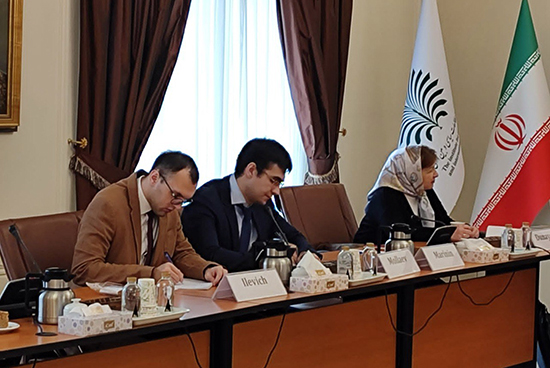
Junior research fellow at the Center for Scientific and Analytical Information of the Institute of Oriental Studies of the Russian Academy of Sciences MIKHAIL ILEVICH noted in his report:
🔴The socio-economic situation in Afghanistan continues to be difficult. Economic stabilization will largely depend on the ability of the Afghan authorities to use limited resources to develop critical transport infrastructure projects.
🔴The government has launched 3,575 projects worth $1.9 billion in the infrastructure, transport, energy, and health sectors through 2021. According to the World Bank, the country's total revenue at the end of the year was more than $2.7 billion, which is insufficient to implement all planned infrastructure projects.
🔴The construction of railways and highways is a priority for the development of the country's transport communications, which requires significant financial resources. Without attracting foreign investment, the development of Afghanistan's transportation infrastructure is problematic.
🔴Railways account for the bulk of the country's trade turnover. Their total length is about 260 kilometers. Most of the freight is transported on the Hairaton-Naibabad-Mazar-e-Sharif railway line. This railway is planned to become a part of the Trans-Afghan Railway (TAT) project, which will connect Uzbekistan, other Central Asian countries and Pakistan through the Termez-Mazar-e-Sharif-Kabul-Peshawar route.
🔴The engineering survey for the construction of the railway from Kandahar to Spin Buldak has been completed. This line is part of a project presented by the Economic Commission of the Government of Afghanistan in May 2023. The project envisages the construction of the Mazar-e-Sharif-Herat-Kandahar railway and its subsequent connection to Pakistan, giving Afghanistan access to Pakistani and Iranian ports, as well as to India.
🔴One of the most promising infrastructure projects is the Iranian-Afghan Khaf-Herat railway. To date, this is virtually the only functioning large-scale project in the country.
🔴Kabul's plans aim to integrate Afghanistan into Eurasian trade and economic relations. The development of transport links will stimulate foreign investment, increase employment, facilitate cross-border cooperation, ease the humanitarian situation, increase the efficiency of resource distribution, support local producers and open new markets for them.
🔴There are a number of factors that hinder the implementation of these projects. First, the projects require enormous financial resources, which Afghanistan does not yet have. Second, the difficult socio-economic situation will inevitably fuel internal political instability, reducing the country's investment attractiveness. Third, the security problem, particularly the threat of terrorism, will be a major obstacle to the launch and operation of most projects.
🔴The creation of a common regional transport and logistics hub in Afghanistan is complicated by the lack of a common standard for railway construction. All major rail projects have different track gauges: Khaf-Herat (1435 mm); Trans-Afghan Corridor (1520 mm); Mazar-e-Sharif-Herat-Kandahar-Spin-Buldak (1676 mm).
🔴Afghanistan faces technical and managerial gaps. The acute shortage of human resources makes it impossible to implement these projects alone.
🔴The further development of the country's transport links will largely depend on external investors and its neighbors, for whom the prospect of turning Afghanistan into a regional transport and logistics hub outweighs any possible risks.

